 Proudly Canadian

Ottawa’s Heating Season Puts Real Stress on HVAC Systems
Ottawa runs a furnace or heat pump for the better part of six months of the year, sometimes longer if spring comes in cold. That is a lot of run time for any piece of mechanical equipment, and it is a big part of why HVAC systems in this city wear differently than they do somewhere milder. A furnace asked to hold a house at 21 degrees through a run of minus 25 nights in January is working harder than the same unit would in a shoulder season climate, and that extra load eventually shows up as a failed igniter, a cracked heat exchanger, or a blower motor that finally gives out.
The flip side is summer. Ottawa gets genuinely hot, humid stretches, and air conditioners that sit idle for eight months a year sometimes fail the moment they are asked to work. Both ends of our climate matter when you are weighing a repair against a replacement, or thinking about how often a system should be serviced. Our pages on heating and cooling go into what each side of the system actually involves.
What a No-Heat Call Looks Like in January
A no-heat call in the middle of an Ottawa winter is a different kind of emergency than most home repairs. Pipes can freeze within hours in an unheated house during a cold snap, so when a furnace quits at ten at night on a Tuesday in January, it is not something that can wait until Thursday. That is the reason we run 24 hour emergency service: a dead furnace in this climate is not an inconvenience, it is a risk to the house itself.
When a technician answers a no-heat call, the first job is figuring out whether it is safe to leave the system off overnight or whether it needs to be running before we leave. Most no-heat calls we see come down to a handful of causes: an ignition failure, a tripped safety switch, a clogged filter restricting airflow, or a thermostat that has lost communication with the furnace. Working out which one it is usually takes longer than fixing it.
What Our Service Visits Actually Cover
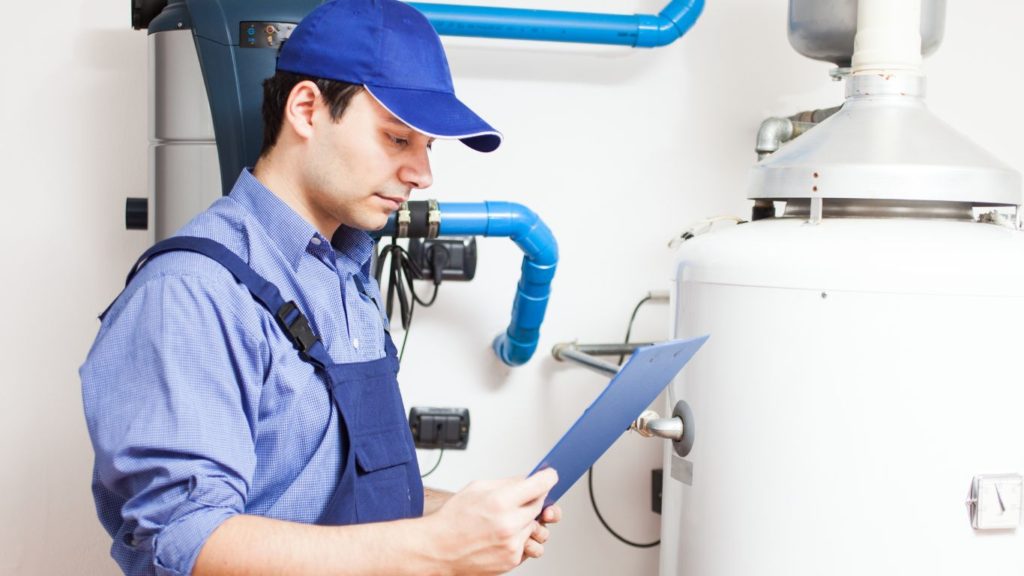
A standard service visit is not just a quick look and a “seems fine.” Our technicians check the burner assembly and ignition system, test the safety controls, inspect the heat exchanger for cracks, measure airflow, check the condensate drain for blockages, and go over the electrical connections and capacitors. On the cooling side that extends to checking refrigerant charge and inspecting the outdoor coil, since a dirty or damaged coil is one of the more common reasons an air conditioner in Ottawa loses capacity by the middle of summer.
We also check the filter and flag anything that needs attention between visits, because a system that is otherwise in good shape can still run poorly on a filter that is overdue for a change. If your home runs on a heat pump rather than a straight furnace, the checklist looks a little different. Our heat pump page covers what is specific to those systems.
Warning Signs Worth Acting On
Some signs are worth a call before the system fails outright. Short cycling, where the furnace or air conditioner turns on and off in quick bursts instead of running a full cycle, usually points to an airflow or sensor problem that gets worse if it is ignored. A burning or musty smell on startup is worth checking too, especially if it lingers past the first few minutes. Rooms that used to heat or cool evenly and suddenly do not, energy bills climbing with no other explanation, and a system that has become noticeably louder are all worth a service call rather than a wait and see approach.
None of this means the system is finished. Most of these issues are cheaper to deal with as a repair than they become once they are left through a season.
Repair or Replace
Age matters here, but so does history. A furnace or air conditioner in the last few years of its expected lifespan that has already had a couple of significant repairs is a different conversation than a mid-life unit with one isolated failure. We look at the cost of the repair in front of us, how the unit has held up so far, and what a comparable new install would cost and deliver in efficiency, and we tell homeowners honestly which side of that line their system falls on. We would rather lose a bigger sale on a system that still has good years left in it than push a replacement that is not needed yet.
Why Annual Service Matters Here
Given how many hours a heating or cooling system in Ottawa actually runs over a year, skipping service tends to catch up with homeowners faster than it might somewhere with a shorter season. An annual check on the furnace before the cold sets in, and, where a home has central air, a check on the cooling side before the first hot stretch, catches the small issues while they are still small: a weakening capacitor, a sensor drifting out of calibration, a coil that needs cleaning before it starts restricting airflow. We work across Ottawa and the surrounding communities we serve, and the pattern holds everywhere: systems that get looked at every year break down less often, and when they do, it is usually a straightforward fix instead of an emergency.
If your system is overdue for a look, or something on this list sounds familiar, get in touch and we will have a technician out to take a look.
