 Proudly Canadian

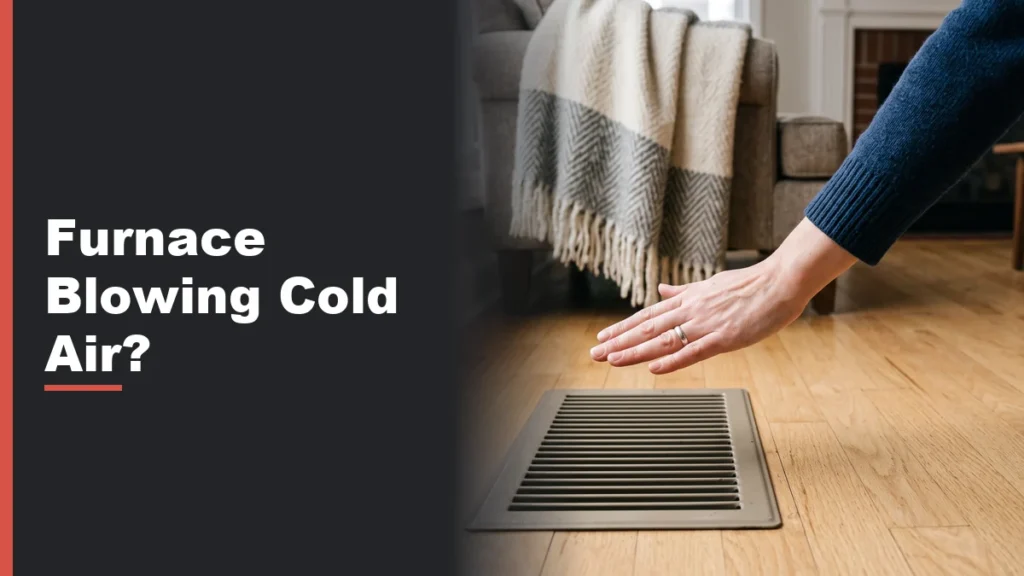
A furnace blowing cold air is one of the most common cold-weather calls we get, and almost every time, the homeowner describes the same moment: the vents are running, the house sounds like it should be heating up, and instead a draft of room-temperature or even cool air is coming out. It feels like a bigger problem than it usually is, and a quick check of the system often finds the cause in a few minutes.
Some causes are things you can check yourself before calling anyone. Others mean stop and get a professional involved. This walks through both, in the order worth checking them.
Good to know
This article is general troubleshooting information. It does not cover every furnace model, and anything involving gas connections, the flame sensor, or the control board should be left to a qualified technician. Treat a gas odour or a sounding carbon monoxide alarm as urgent, not a troubleshooting step.
Why a Furnace Blowing Cold Air Isn’t Always Broken
A furnace only sends warm air through the vents once the burners have actually fired and heated the air passing over the heat exchanger. The blower fan and the burners are controlled somewhat separately, which is exactly why a furnace blowing cold air does not always mean the whole system has failed. Often the fan is doing its job correctly while something upstream, the part that actually makes heat, is not.
A brief burst of cool air right when the system starts is normal, since many furnaces run the fan for a moment before the burners are fully up to temperature. Cold air that continues for more than a minute or two, or air that never warms up at all, is the pattern worth diagnosing.
Three Things Worth Checking Yourself
Before assuming the worst, these three checks take a couple of minutes and solve the problem more often than people expect:
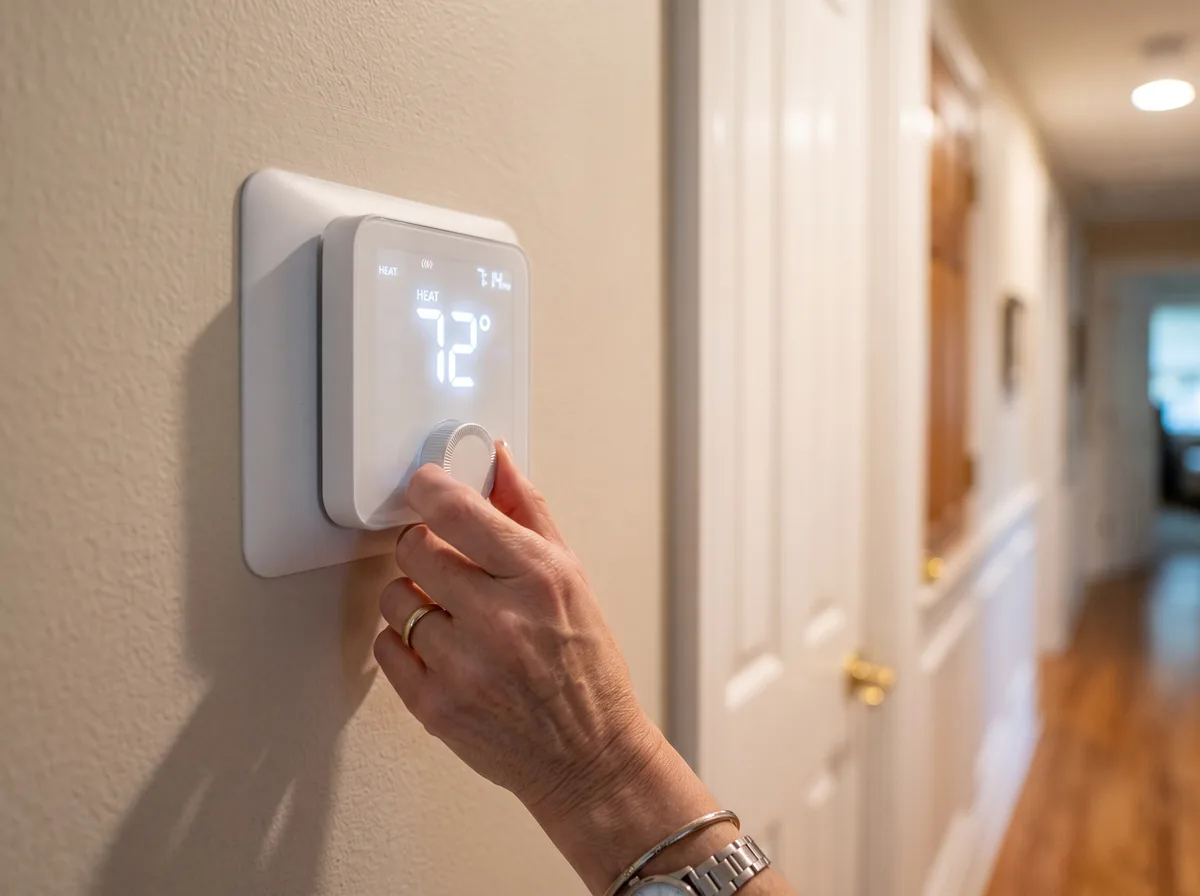
- Thermostat mode and fan setting: confirm it reads heat, not cool, and that the fan is set to auto rather than on, since a fan left running constantly will circulate room-temperature air between heating cycles
- Air filter: a filter that is clogged with dust restricts airflow and can trigger a safety shutdown that leaves the fan running with no heat behind it
- Supply vents: closed or blocked vents raise pressure inside the duct system and can cause the same symptom in certain furnaces
Pro Tip
Write down what you checked and what you found before calling for service. Telling a technician the thermostat was already on auto and the filter looked clean saves time on the visit and usually means a faster, more accurate diagnosis.
When It Is Not a Quick Fix
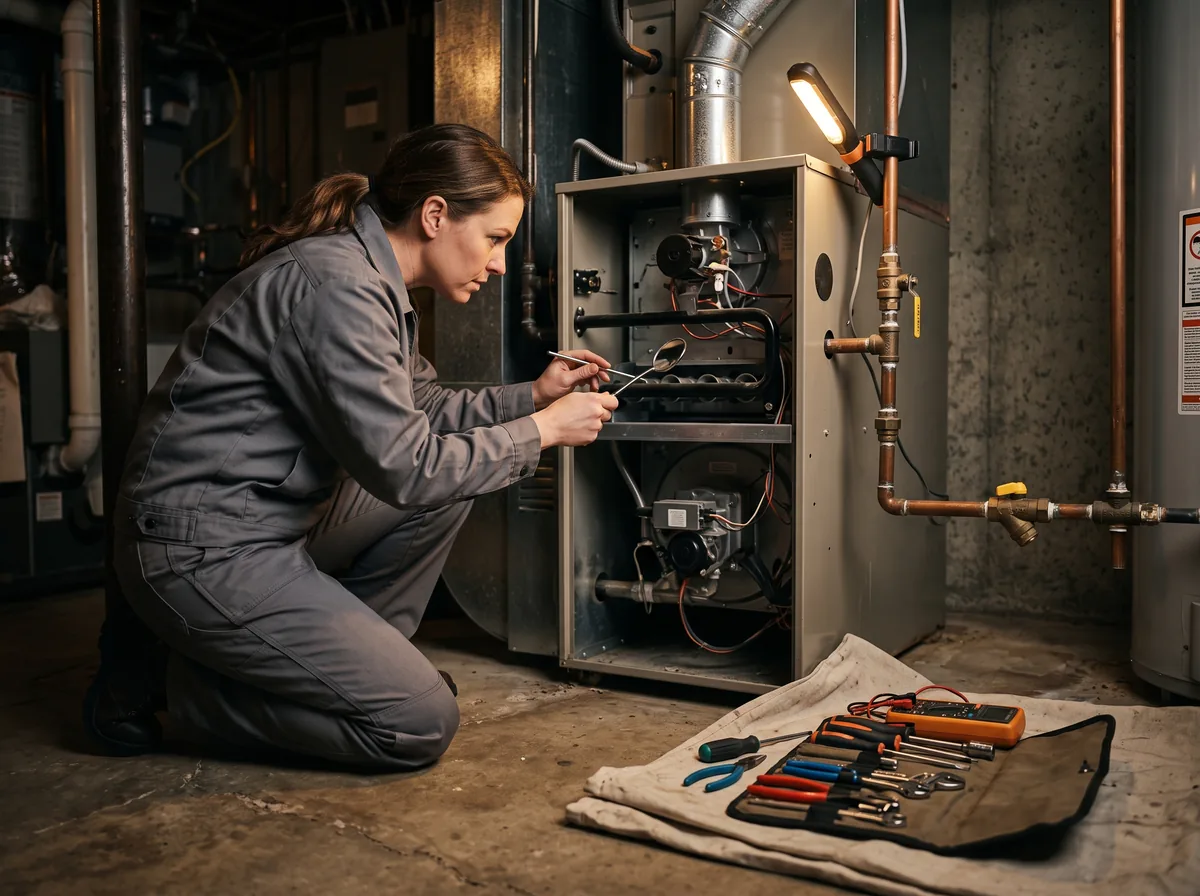
If the thermostat, filter and vents all check out and the furnace is still blowing cold air, the cause has moved past what most homeowners can safely check on their own. On older gas furnaces, a pilot light that has gone out will stop the burners from lighting at all, though most furnaces built in the last couple of decades use electronic ignition instead of a standing pilot.
Past that point, the usual causes are a flame sensor that has gotten dirty enough to shut the burners down as a safety measure, a limit switch that is misreading temperature and cutting the burners early, a stuck valve on the gas supply line, or a leak in the ductwork itself, sometimes handled with duct inspection and sealing rather than a furnace repair at all. a major furnace manufacturer’s troubleshooting guide lists the same general split: thermostat, filter and vents are homeowner territory, while the flame sensor, limit switch, gas supply and control board need a technician.
Signs That Mean Stop and Call a Professional
Red Flag
A gas smell, a scorched or burning odour that is not the normal first-minute dust smell, soot around a vent, or a carbon monoxide alarm sounding are not troubleshooting steps to work through on your own. Turn the system off if it is safe to reach the switch, get everyone out of the house, and call emergency HVAC service or your gas utility’s emergency line from outside.
Short of an emergency, a furnace that keeps blowing cold air after the checks above, or one that used to run fine and has gradually gotten worse, is still worth a service call rather than repeated troubleshooting. Repeated attempts to relight or reset a system that keeps failing the same way can mask a developing problem instead of fixing it.
What to Do Next
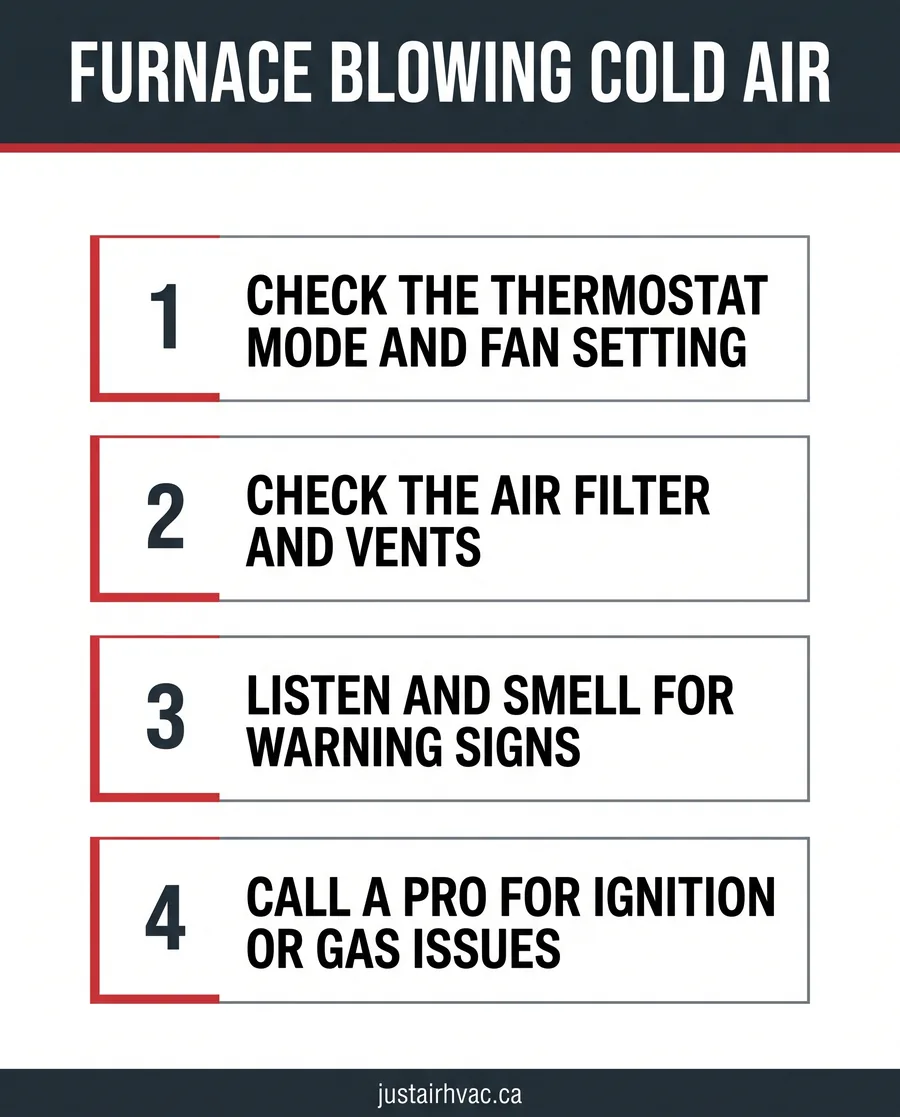
If the furnace is blowing cold air right now, here is the order worth working through:
- Check the thermostat mode and fan setting first, since it solves the problem more often than any other single step
- Check the filter and make sure supply vents around the house are open
- Note any smells, sounds, or an alarm, and treat a gas odour or carbon monoxide alarm as an immediate call from outside the house
- If none of that resolves it, book a diagnostic visit rather than continuing to reset the system
Download the free quick guide
A printable version of the checks above, plus what to tell a technician before they arrive.
Frequently Asked Questions
Why is my furnace blowing cold air but still running?
The blower fan and the burners are controlled somewhat separately, so the fan can keep running normally while whatever makes the heat, the ignition system, a flame sensor, or the gas supply, has stopped working. That is why a furnace blowing cold air often does not mean the whole system has failed. Start with the thermostat and filter, since those solve the problem more often than a bigger mechanical failure does.
Is it normal for cold air to blow for a minute when the furnace starts?
Yes, briefly. Many furnaces run the blower for a short moment before the burners reach full temperature, so a minute or so of cool air right at startup is typically normal. Cold air that continues well past that, or that never warms up at all during the cycle, is the pattern that points to an actual problem worth checking further.
Can I fix a furnace blowing cold air myself?
Sometimes. Checking the thermostat mode and fan setting, replacing a dirty filter, and making sure supply vents are open are all things most homeowners can safely handle. Anything involving the pilot light, flame sensor, gas valve, limit switch or control board should go to a qualified technician, since those components can involve gas or electrical risk if handled incorrectly.
How do I know if a cold air problem is a safety issue?
Treat it as urgent if you notice a gas smell, a scorched odour that is not the brief first-minute dust smell, soot around a vent, or a carbon monoxide alarm sounding. In any of those cases, turn the system off if it is safe to reach the switch quickly, leave the house, and call for emergency help from outside rather than continuing to investigate on your own.
How quickly can someone come out if my furnace won’t heat at all?
Same-day emergency service is available for a furnace that has stopped heating entirely, particularly during cold weather when waiting is not a reasonable option. For a furnace that is still running but blowing cold air rather than fully down, a standard diagnostic visit is usually the right call once the checks above have been ruled out.
Just Air HVAC answers cold-air calls across Gloucester, Clarence-Rockland and Findlay Creek, and if the checks above have not solved it, booking a diagnostic visit gets someone looking at the actual cause instead of another round of guessing.
