 Proudly Canadian


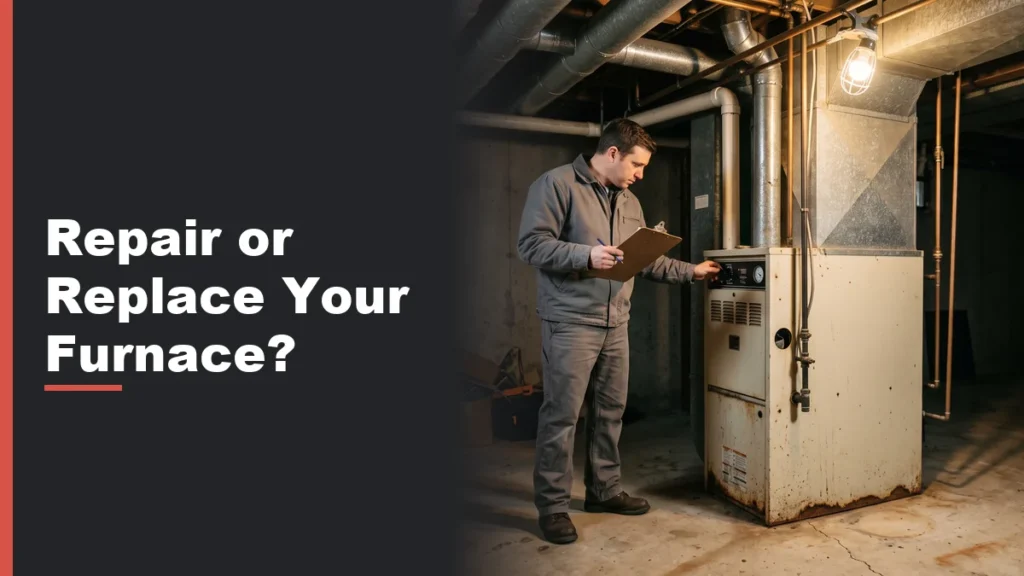
Here is the short version. If the furnace is relatively young and this is its first real repair, fix it. If it is old, this is not the first repair, and the cost of fixing it starts creeping up toward what a new system would run, replacing it usually makes more sense. Almost every repair or replace furnace decision in an Ottawa heating system comes down to some version of that trade-off, and the rest of this article walks through how to weigh it for your specific situation.
None of that is a hard rule, and it should not be treated as one. It is a starting point for the conversation you have with a technician once they have actually looked at the system.
The Short Answer First
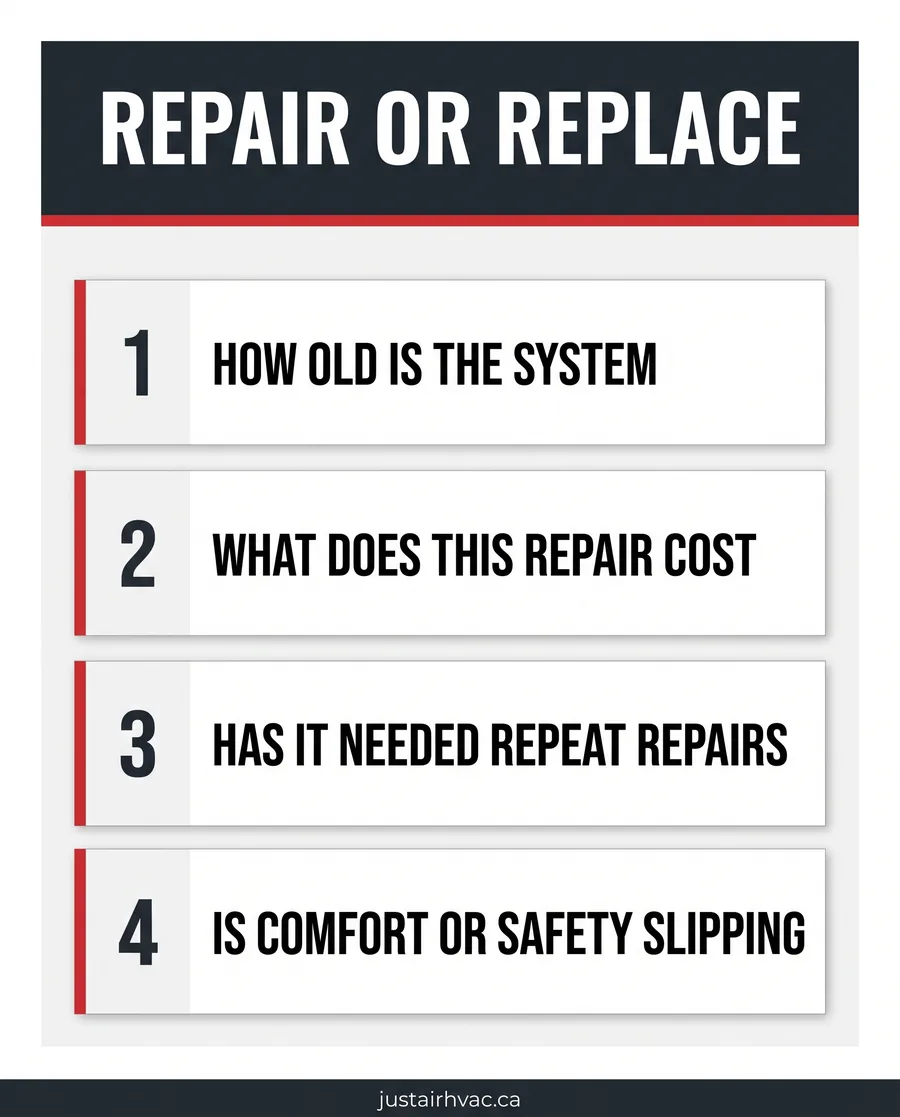
Most repair or replace furnace conversations run through the same handful of questions, in roughly this order: how old is the unit, what does fixing it cost this time, has it needed repeated repairs recently, and is comfort or safety slipping along the way. Answer those honestly and the decision usually makes itself.
Quick Take
Younger system, first repair, isolated part failure: repair usually wins. Older system, another repair on top of previous ones, or a cost that starts approaching a meaningful share of a new furnace: replacement usually wins. Everything below is how to tell which situation you are actually in.
How Old Is the Furnace?
Age alone never settles a repair or replace furnace decision, but it shapes every other factor. A furnace that is built to run reliably for a long stretch depends heavily on maintenance history and how hard it has been worked, so two units of the same age can be in very different condition. As a system gets older, though, replacement parts commonly become harder to source and efficiency tends to decline, which quietly shifts the math toward replacement even before a major failure forces the question.
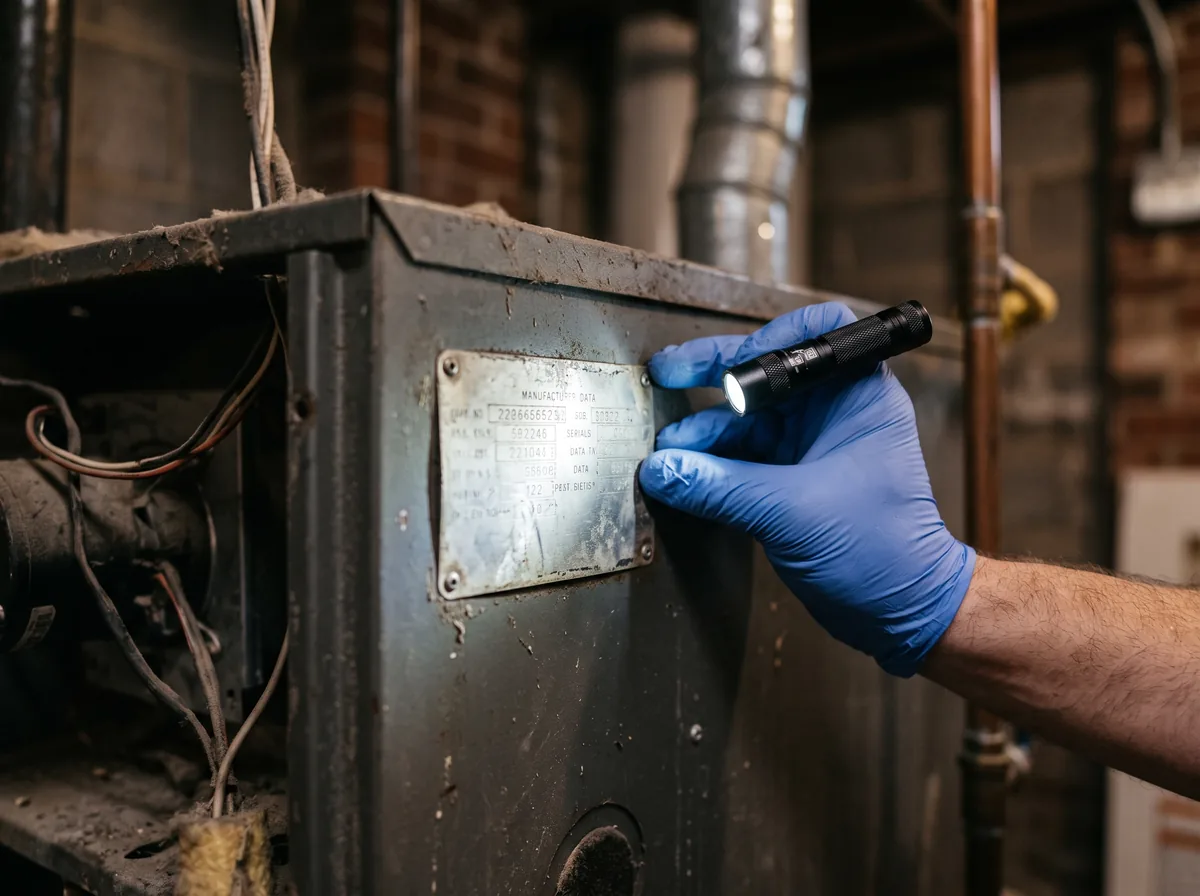
If you do not know the furnace’s age, the data tag on the side panel usually has a manufacture date, and a technician can read it for you in about a minute during any visit.
What Does the Repair Actually Cost?
A single repair on a system that is otherwise working well is often the lower-cost path, and there is rarely a reason to replace a furnace over one failed part. The calculation changes as a system ages and the repairs start stacking up. The further a furnace gets from new, the more a string of repairs starts to add up toward what a replacement would cost, and at some point paying for the same system twice over stops making sense.
Save Your Money
Ask for a written estimate before any repair over a routine part, and ask directly whether the technician would put that money toward a repair or toward replacement if it were their own furnace. A straight answer to that question tells you a lot, and financing options exist if replacement turns out to be the better call and the timing is inconvenient.
Is This a Repeat Repair?
One failure is a data point. A second unrelated failure within a year or two is a pattern, and a pattern is a stronger signal than any single repair bill. A furnace that keeps needing different components fixed is often telling you that the system as a whole is wearing out, not that it has had a run of bad luck with individual parts.
If a complete breakdown happens in the middle of a cold stretch and there is no time to weigh the decision carefully, same-day emergency service can get heat back on while you make the repair or replace call with less pressure.
Repair or Replace a Furnace: The Verdict
A few signs tend to point toward replacement even when a single repair looks affordable on its own: uneven heat that a repair has not fixed, a furnace that short-cycles more than it used to, rising energy bills that a technician cannot trace to anything else, or a household that has simply outgrown what an older system was built to handle. None of these are absolute on their own, which is why a second opinion from a licensed contractor is worth getting before committing either way.
A member of the national HVACR trade association has agreed to carry insurance, valid trade certificates, and a code of ethics as a condition of membership, which is a reasonable baseline to look for when you want a second opinion you can trust.
Good to know
This article offers general guidance for Ottawa homeowners weighing a furnace repair against replacement. It is not an assessment of your specific system. Actual condition, safety, and cost can only be confirmed by a qualified technician who has inspected the furnace in person.
Download the free quick guide
A printable guide to the questions worth asking before you commit either way, plus what to have ready before a technician arrives.
Frequently Asked Questions
How do I know if I should repair or replace my furnace?
Weigh four things together rather than any one on its own: the furnace’s age, what this particular repair costs, whether it has needed other repairs recently, and whether comfort or efficiency has been slipping. A young system having its first repair almost always leans toward fixing it. An older system with a repeat repair and a cost that is climbing toward replacement territory leans the other way. A technician who has seen the system in person can weigh all four faster than a homeowner guessing remotely.
Is it ever worth replacing a furnace before it actually breaks down?
Sometimes, though it depends on the specifics. If a system is showing several warning signs at once, such as uneven heat, rising bills a technician cannot explain, and more frequent cycling, waiting for a full breakdown often just trades a planned replacement for an unplanned one in the middle of a cold week. That is a judgment call worth making with a technician’s input rather than on a hunch.
How much does a furnace repair typically cost compared to replacement?
It varies too much by the specific part, the system, and the job to state a general figure that would hold up across different homes and furnaces. What matters more than any single number is the trend: does each repair bring you closer to what a new system would cost, or is it a one-time fix on an otherwise healthy furnace. Ask for a written estimate every time so you can track that trend yourself.
What happens if my furnace breaks down completely in winter?
Call for emergency service rather than trying to diagnose it yourself, especially if you smell gas or hear a carbon monoxide alarm, in which case leave the house first and call from outside. Same-day emergency HVAC service exists for exactly this situation, and getting heat restored quickly buys you the time to make the repair or replace decision properly instead of under pressure.
Should I replace the furnace and air conditioner at the same time?
Not automatically. Furnaces and air conditioners often wear out on different timelines even in the same house, so replacing both at once only makes sense if they are close in age and condition. A technician can tell you whether pairing the two jobs would genuinely simplify things for your specific setup or whether it is just an upsell worth skipping.
If nothing above points clearly one way, that is normal. Most repair or replace furnace calls come down to a five-minute conversation with someone who has actually opened the panel and looked. Just Air HVAC serves homeowners across Stittsville, Orleans and Manotick working through exactly this decision, and booking a diagnostic visit is the fastest way to get a straight answer instead of a guess.
