 Proudly Canadian


What is a heat pump, really? Not the sales pitch version, the mechanical one. It is a single piece of equipment that heats a home in winter and cools it in summer by moving heat from one place to another instead of burning fuel to create it, and understanding that one idea makes everything else about the system click into place. If you are weighing a heat pump comfort assessment for an Ottawa area home, it helps to know what is actually sitting in the box outside your wall before anyone starts talking brands or models.
This is the plain-language version: what the equipment is, the parts that make it work, and how it differs from the furnace or air conditioner you may already have.
What a heat pump actually is
A heat pump is a piece of equipment that transfers heat rather than generating it. In winter it draws warmth out of the outdoor air, even when that air feels cold, and delivers it inside. In summer it runs the same process in reverse, pulling heat out of the house and sending it outdoors, which is the part of the job that looks and feels like ordinary air conditioning.
According to Natural Resources Canada, a heat pump is fully reversible, meaning the same equipment handles both heating and cooling, and because it moves heat rather than burning fuel to make it, the department notes it can heat a home up to 2.5 times more efficiently than a gas furnace, depending on the type of system and how it is installed. That single fact, one box doing two jobs, is the whole idea behind the technology.
Did you know
An air conditioner is already a heat pump running in one direction. The core hardware, a compressor, a refrigerant loop, and two coils, is largely the same. What makes a heat pump different is one added part covered below: a valve that lets the whole system run backward.
The main components inside the system
Pop the covers off a heat pump and there are really only a handful of parts doing the work. Here is what each one does.
The outdoor unit
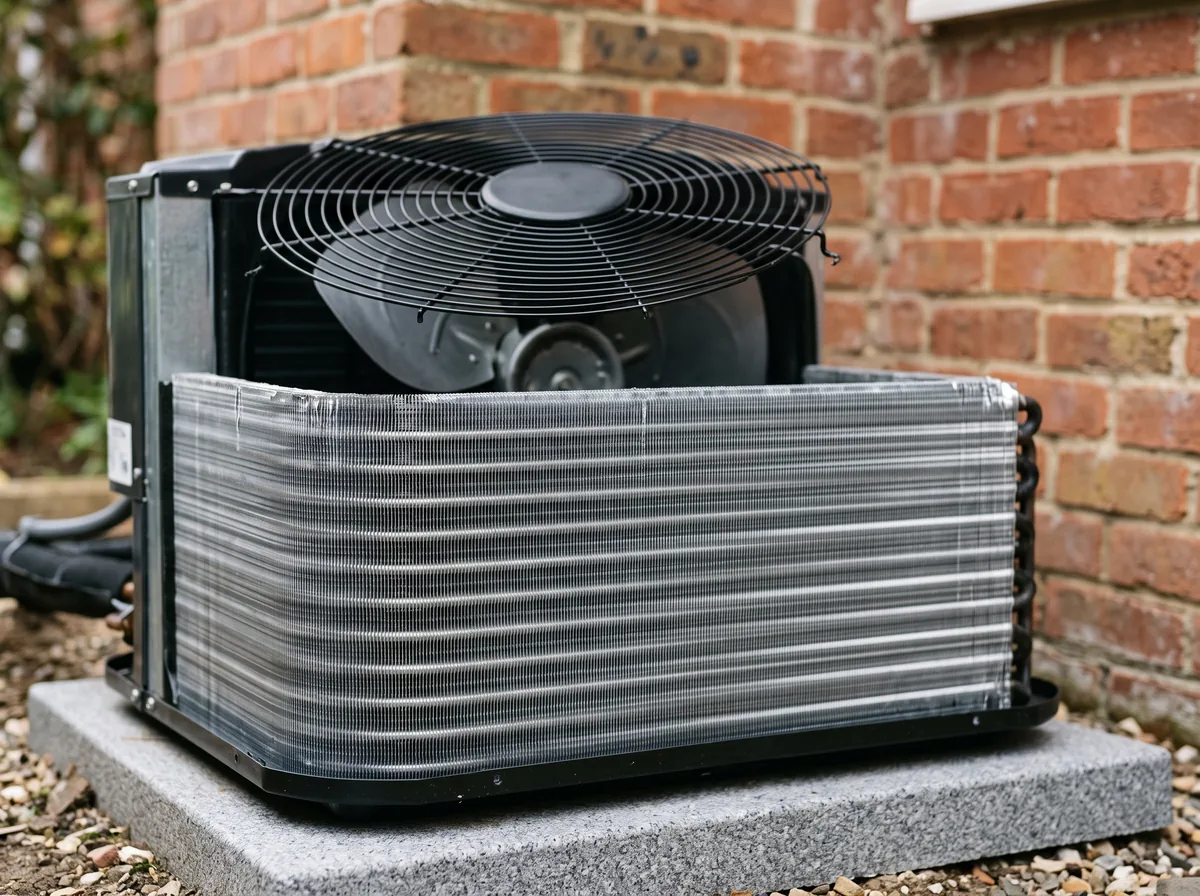
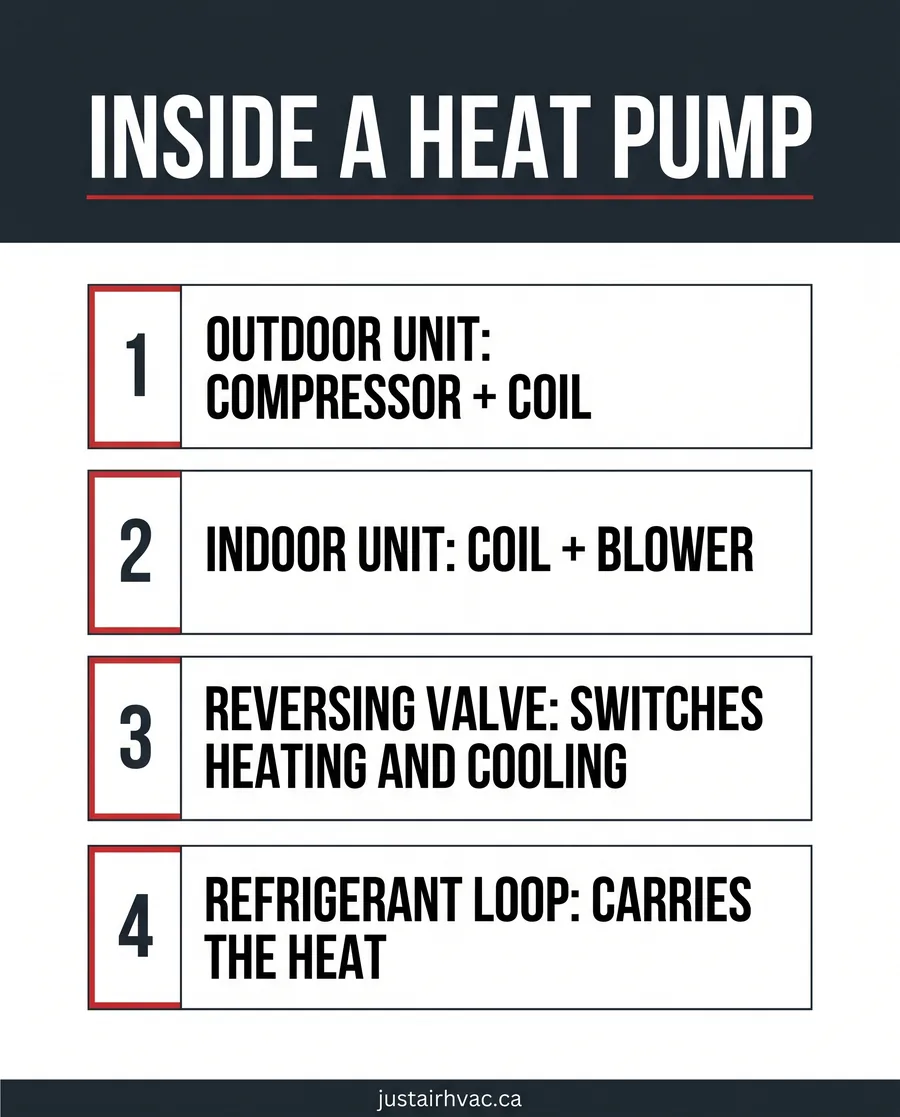
The unit sitting on a pad or bracket outside the home houses the compressor and one of the two coils. The compressor is the workhorse: it pressurizes refrigerant, which raises its temperature so it can release heat wherever the system needs it delivered. The outdoor coil is where the equipment either absorbs heat from outside air, in heating mode, or dumps heat into it, in cooling mode.
The indoor unit
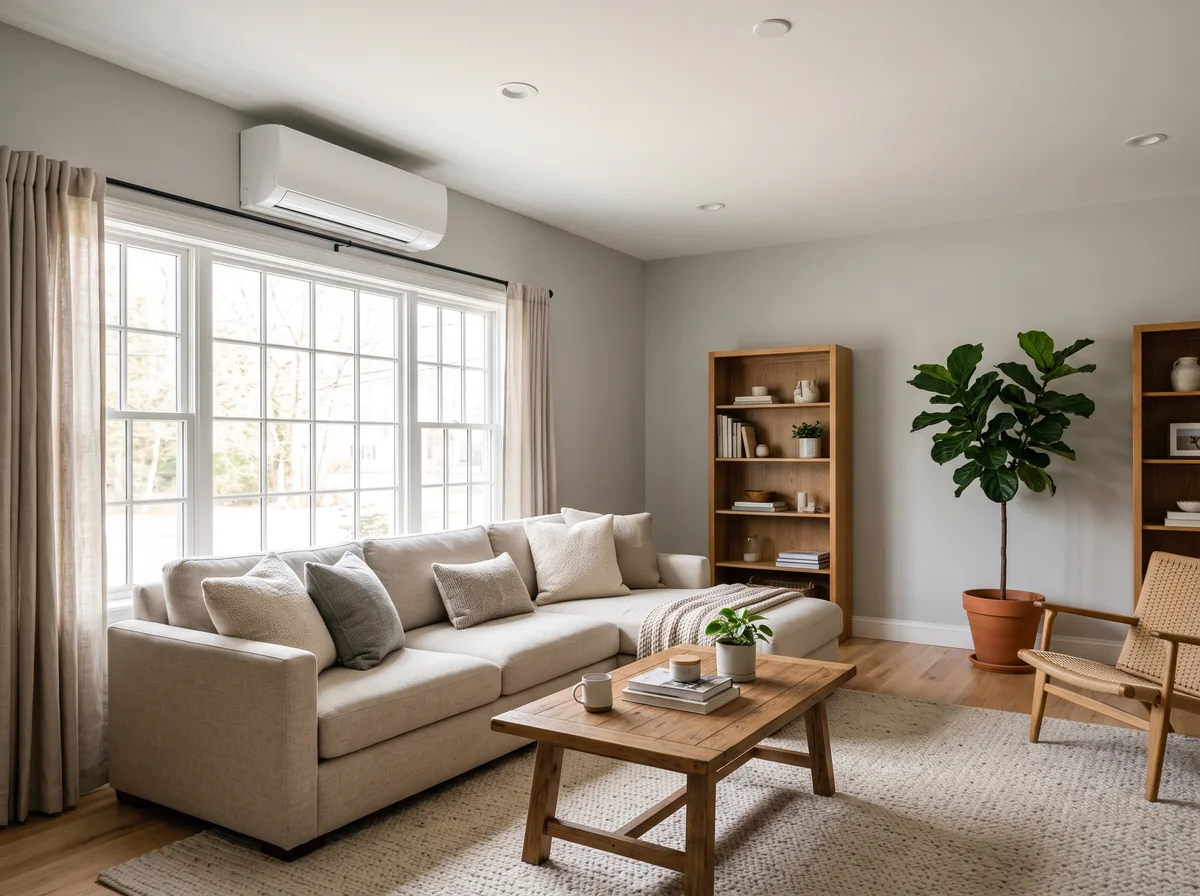
Inside the home, the second coil and a blower distribute conditioned air. On a central, ducted system this is the air handler tied into your existing ductwork. On a ductless system it is one or more wall-mounted or ceiling-mounted heads, each with its own small blower, positioned directly in the room being heated or cooled.
The reversing valve: the part that makes both jobs possible
This is the piece that separates a heat pump from a plain air conditioner. Refrigerant normally flows one direction through the loop, picking up heat in one coil and releasing it in the other. The reversing valve flips that flow on command, so the coil that was releasing heat indoors in January can release heat outdoors in July instead. It is a small, unglamorous part, and it is the reason one box can replace two.
How it differs from a furnace or an air conditioner
A gas furnace makes heat by burning fuel in a combustion chamber, then pushes the resulting warm air through a furnace-based heating system and into your ductwork. A heat pump never burns anything. It moves heat that already exists in the outdoor air. That is the core difference, and it is also why a heat pump’s efficiency is usually described differently than a furnace’s: it is not converting fuel to heat, it is relocating heat that is already there.
A standard air conditioner, meanwhile, only moves heat in one direction: out of the house. If your home currently has a standalone air conditioning system, picture that same outdoor unit, plus a reversing valve, and you have most of a heat pump.
| Equipment | Makes heat by | Also cools the home |
|---|---|---|
| Gas furnace | Burning fuel | No |
| Central air conditioner | Does not make heat | Yes, only |
| Heat pump | Moving heat from outside air | Yes, same unit |
People often ask
Is a heat pump the same as central air conditioning? Not quite. They share most of the same hardware, but a heat pump adds the reversing valve that lets it also heat the home, which a standard air conditioner cannot do on its own.
Ducted, ductless, and other types you will see
Not every heat pump looks the same from the street. A central, ducted heat pump uses an outdoor unit that closely resembles a standard air conditioning condenser, tied into the ductwork a home already has. ductless mini-split system installation skips ductwork entirely, pairing a smaller outdoor unit with one or more indoor heads mounted directly in the space being conditioned, which tends to come up for additions, garages, or older homes without existing ducts.
Some households also run a heat pump alongside a furnace in what installers call a dual-fuel or hybrid setup, where the two systems are sequenced to hand off to each other. That pairing decision comes down to a home’s layout and heating demand, which is a conversation for a licensed contractor rather than a guess made from a spec sheet.
Did you know
A ductless mini-split is not a separate category of equipment. It is a heat pump built around a different way of delivering air, using indoor heads instead of ductwork, but running on the same refrigerant cycle and reversing valve described above.
Where this fits in a Nepean or Kanata home
Housing stock varies a lot across the region, from older infill homes with radiators and no ductwork to newer builds already piped for central air. That variation is exactly why the component walkthrough above matters more than a single recommended model: whether a ducted or ductless configuration fits a specific Nepean bungalow or a newer Kanata two-storey depends on what is already in the walls, not on which system is trending.
A site visit is the fastest way to sort that out, since photos and a general description only go so far.
Good to know
This article explains general heat pump technology and is not sizing, cost, or performance guidance for any specific property. Equipment selection, sizing, and expected performance vary by home and should be confirmed with a licensed HVAC contractor. Just Air HVAC is not responsible for decisions made solely on the basis of this article.
Download the free quick guide
A printable rundown of what the equipment does, its main parts, and the questions worth asking before you buy.
Frequently asked questions
Is a heat pump the same thing as an air conditioner?
Not quite, though the two share a lot of hardware. A standard air conditioner only moves heat in one direction, out of the home. A heat pump uses a reversing valve so the same equipment can also run in the opposite direction, pulling heat from outside air and delivering it indoors. If you already have central air conditioning, the outdoor unit will look familiar. What is different is that a heat pump keeps working through the colder months instead of sitting idle once summer ends, doing double duty as your home’s heating and cooling equipment.
Does a heat pump replace a furnace completely?
That depends on the setup a home ends up with. Some households use a heat pump as their only heating and cooling equipment. Others pair it with a furnace in what is often called a dual-fuel or hybrid arrangement, where the furnace steps in during the coldest stretches of the year. Which setup makes sense depends on the home’s heat loss, the ductwork already in place, and how the two systems would need to be sequenced, which is a conversation worth having directly with a licensed HVAC contractor.
What does the reversing valve actually do?
It is the part that lets one piece of equipment both heat and cool a home. Refrigerant normally flows in one direction through the system, picking up heat in one coil and releasing it in the other. The reversing valve flips that flow, so the coil that was releasing heat indoors in winter can instead release heat outdoors in summer. Without it, a heat pump would function more like a one-way air conditioner. It is a small component, but it is the reason the whole system can do two jobs instead of one.
Do all heat pumps look like a central air conditioner outside?
Many do, since a central, ducted heat pump uses an outdoor unit that looks close to a standard air conditioning condenser. Ductless mini-split systems look different: they pair a smaller outdoor unit with one or more wall-mounted or ceiling-mounted indoor heads, and skip ductwork entirely. Which style fits a given home usually comes down to whether ductwork already exists, the layout of the space being conditioned, and preference. A contractor walking the property is the best way to sort out which configuration actually fits.
Is a ductless mini-split a type of heat pump?
Yes. A ductless mini-split is a heat pump built around a different delivery method: instead of pushing conditioned air through ducts, it uses one or more wall-mounted indoor heads connected to a compact outdoor unit. It uses the same core refrigerant cycle and reversing valve as a ducted system, which is why it can heat and cool a room the same way. It tends to come up for additions, garages, or older homes with no existing ductwork, where running new ducts would be impractical.
The short version: a heat pump is a compressor, two coils, and a reversing valve doing the work that a furnace and an air conditioner would otherwise split between two separate systems. If you want to see how that hardware behaves once the temperature drops, the cold-weather operation and the ratings that matter for an Ottawa winter are both covered in the related reading above.
For homeowners in Barrhaven, Stittsville, or anywhere in between who want to talk through what a heat pump would actually look like on their own house, book an Ottawa heating and cooling visit and we will walk the property with you.
