 Proudly Canadian



Short answer: if static shocks you at every doorknob, your hardwood floors grow gaps every January, and your houseplants sulk from November through March, you probably need a whole-home humidifier. If none of that sounds like your house, hold off. The honest way to find out if you need a whole-home humidifier is to check your home against the pattern below rather than guess, and have a system sized to your house by a licensed technician only after you know which side of that line you’re on.
Furnace heat is the reason winter air inside an Ottawa home gets drier than the air outside it. Cold outdoor air already holds little moisture, and heating it without adding any back drops the indoor humidity further still. A whole-home humidifier ties into the furnace or air handler and puts some of that moisture back in, automatically, for the whole house at once. Whether that is worth installing depends less on the season and more on what your specific house is already telling you.
What a whole-home humidifier actually does
A whole-home humidifier is a single unit plumbed into your forced air system, not a tank you carry from room to room. Water enters through a small supply line, and as furnace air passes through the unit, some of that water evaporates into the airstream and gets distributed through the same ducts that already heat the house. A humidistat, usually mounted near the thermostat or on the return duct, tells the unit how much to add and when to stop.
That is the whole mechanism. No reservoir to top up every few days, no unit humming on a side table. It runs quietly in the mechanical room, working whenever the furnace fan is moving air.
Quick take
If you need a whole-home humidifier, static shocks are usually the fastest single clue. Portable humidifiers treat one room. A whole-home unit treats the air the furnace is already circulating everywhere, with no tank to refill and no filter to remember. That convenience is the main trade against a higher upfront cost.
Signs your home could use one
If you need a whole-home humidifier, these are the patterns to watch for first. One of them on its own might be nothing. Two or three showing up every winter is a real signal.
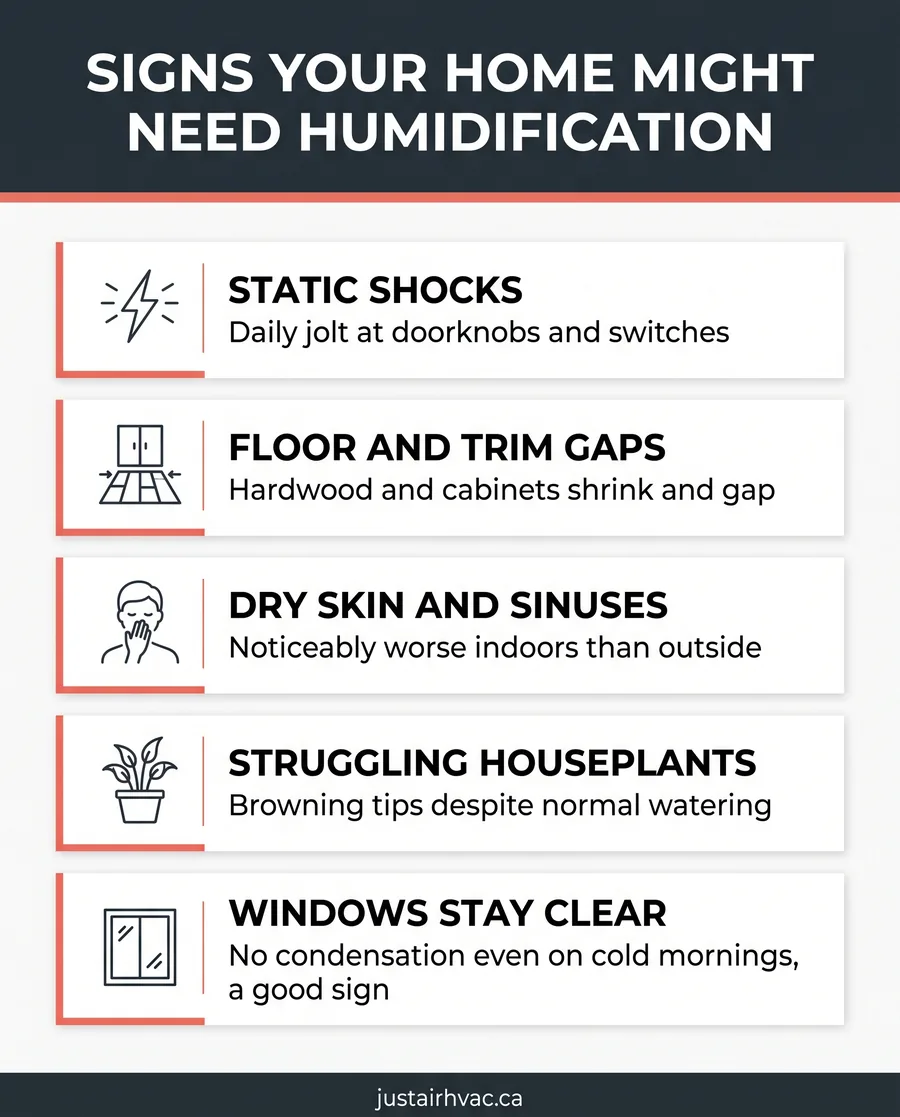
- Static shocks at doorknobs, light switches and other people become a daily thing once the furnace has been running for a few weeks.
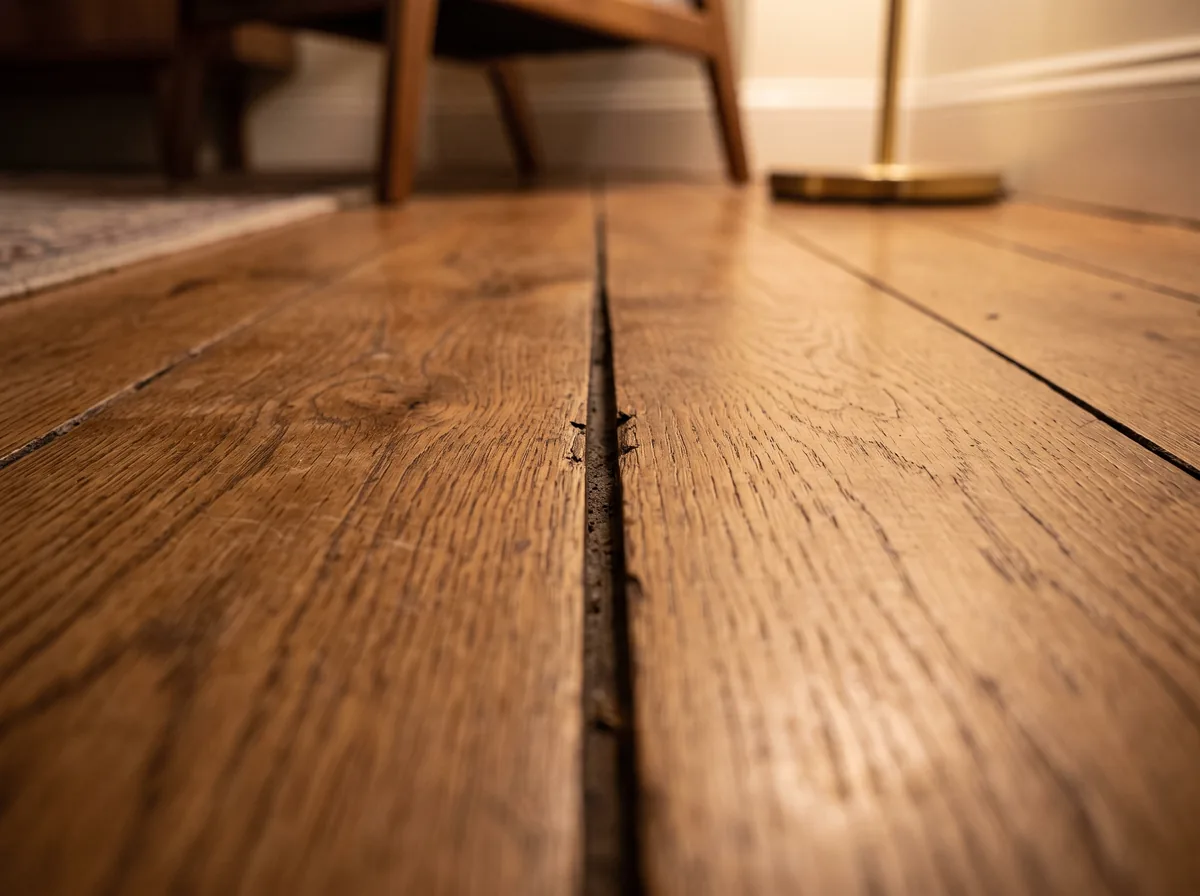
- Hardwood floors, trim or cabinet doors develop visible seasonal gaps that close up again by summer, which points to the wood itself losing moisture to dry indoor air.
- Skin, lips or sinuses feel noticeably drier indoors than the weather outside would explain.
- Houseplants that were fine in October start browning at the tips by January despite normal watering.
- A wooden musical instrument, especially one with a solid top, starts sounding or feeling different once the heat has been on for a while.
Signs you probably don’t need one yet
Just as important is knowing when to hold off. Adding moisture to a house that already has a moisture problem tends to make that problem worse, not fix a comfort complaint.
- Windows already fog, drip or ice up on the inside during cold mornings. That points to too much moisture or too little ventilation, and a humidifier would push in the wrong direction.
- You have had a musty smell, visible mould, or a damp basement in the past two years that has not been fully addressed.
- The house is older with original single-pane or poorly sealed windows, where colder glass condenses moisture at a much lower humidity level than newer, better-insulated windows do.
- Nobody in the household has actually noticed dry-air symptoms. A humidifier solves a specific discomfort. It is not a default upgrade every home benefits from.
The window test is the fastest gut check. According to guidance from Health Canada on moisture and mould prevention, a comfortable, healthy target for indoor relative humidity generally sits between 30 and 50 percent. If your windows are already showing condensation anywhere near that range, the ventilation side of the house needs attention before the humidity side does.
People often ask
“Can’t I just tell if my house needs one by how the air feels?” Not reliably. Skin and sinuses adapt over a few days, so the static shocks and floor gaps are a more consistent signal than how the air feels in the moment.
So, do I need a whole-home humidifier?
Put the two sections above side by side and most homes sort themselves fairly cleanly. Here is the short version.
| Your situation | Likely verdict | Why |
|---|---|---|
| Static shocks, dry skin, cracking floors or trim every winter | Strong case for whole-home | Furnace air alone commonly pulls indoor humidity well below a comfortable range once heating season sets in |
| A newer, tightly built or recently insulated home | Worth checking, not assumed | Tighter construction holds heat well but also traps less naturally occurring moisture from daily living |
| Windows already fog or drip on cold mornings | Hold off, address ventilation first | Adding humidity on top of an existing moisture issue typically makes condensation worse, not better |
| Already running one or two portable humidifiers | Compare before assuming you need more | A whole-home unit commonly covers what several portables do, without the daily refill and tank cleaning |
| Hardwood floors, a finished basement, or a wooden instrument | Worth a closer look | Wood and instruments tend to respond to moisture swings before people notice a comfort difference |
How installation actually works
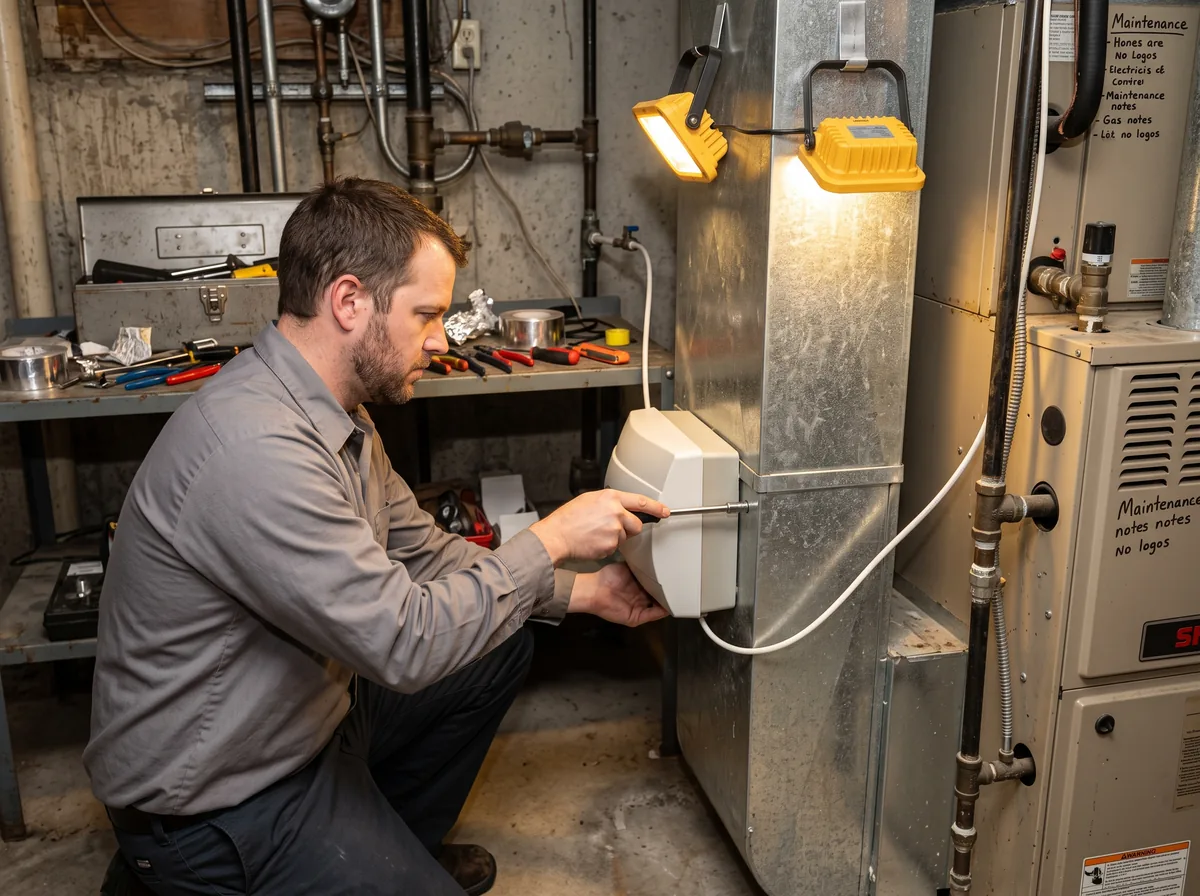
If you need a whole-home humidifier, the process itself is straightforward. A technician looks at your furnace or air handler and your ductwork layout, then recommends a unit sized to that combination rather than a one-size-fits-all box. Installation ties the unit into the supply and return ducts, connects a water line and drain, and wires in a humidistat control.
Most systems fall into one of three types. A bypass humidifier uses the furnace fan’s own air pressure and needs no additional fan of its own. A fan-powered unit adds a small fan for more consistent output regardless of blower speed. A steam humidifier heats water directly and handles larger or leakier homes the other two struggle with. Which one fits is exactly what a site visit settles.
What living with one is actually like
Day to day, a whole-home humidifier is close to invisible. The humidistat holds a target level and adjusts as outdoor temperature swings, since colder outside air needs a lower indoor target to avoid condensing on window glass. Owners mostly interact with it twice a year: open the water supply and set the humidistat in fall, shut it off in spring.
The maintenance that actually matters is the water panel or pad, which collects mineral deposits and needs periodic replacement. Skipping that step is the most common reason a unit that worked fine last winter seems to struggle the next one.
Good to know
This article is general information to help you decide whether whole-home humidification is worth exploring for your house. Correct sizing, humidity targets and equipment choice depend on your specific home, ductwork and construction, and should be confirmed with a licensed technician before any installation. Just Air HVAC is not responsible for decisions made solely on the basis of this article.
Download the free quick guide
A printable page: the signs worth checking around your house and the questions to bring to an installer before you commit to whole-home humidification.
Frequently asked questions
How do I know if I need a whole-home humidifier instead of a portable one?
Start with coverage and effort. If dry-air symptoms show up in more than one room, or you are already running two or three portable units and still refilling tanks every few days, that is usually the point where a whole-home system pays back the convenience. A single dry bedroom that a bedside unit already fixes probably does not need a whole-house solution. The decision matrix above is a faster way to check than trial and error with portable units room by room.
Will a whole-home humidifier stop static shocks completely?
Usually, though not to zero. Static builds up fastest in air below about 30 percent relative humidity, and a properly sized whole-home unit is aimed at keeping the house above that range through the coldest months. Most owners notice static shocks drop off sharply within the first week or two once the humidistat is set correctly. A few stray shocks on the driest, coldest days are still normal, especially near carpeted rooms, but the daily doorknob jolt should become the exception rather than the routine.
Can a whole-home humidifier cause mould or window condensation?
It can, if the target humidity is set too high for how well your windows and walls handle moisture, which is exactly why the condensation check matters before installing one. A unit paired with a humidistat that adjusts down as outdoor temperature drops is built to avoid this. If you already see condensation at your current indoor humidity, that is a sign to fix ventilation or window sealing first, or to have a technician set a more conservative target rather than skip humidification altogether.
How is a whole-home humidifier different from running a few portable ones?
A whole-home unit ties into the furnace or air handler once and treats every room the ductwork reaches, automatically, without a tank to refill. Portable units treat one room at a time, need regular refilling and cleaning to avoid mineral buildup or mould in the tank, and their coverage drops off the further you get from the unit. Several portables can approach the whole-home effect in a small house, but the daily upkeep is the trade-off most people are comparing when they ask this.
Does a whole-home humidifier work with a heat pump, not just a furnace?
Yes, as long as there is a central forced air system with ductwork for the unit to tie into. The humidifier connects to the air handler side of the system rather than the heating source itself, so it works whether the heat behind that air handler comes from a gas furnace or a heat pump. The main difference a technician will check is airflow and duct layout, not which equipment is providing the heat.
How much maintenance does a whole-home humidifier actually need?
Less than most people expect, but it is not zero. The water panel or pad inside the unit collects mineral deposits over a heating season and typically gets replaced once a year as part of fall start-up. Beyond that, a quick look at the water line and drain for scale buildup covers most of what goes wrong. Skipping the annual pad swap is the most common reason a unit that worked fine last winter seems to struggle to keep up the next one.
If you counted two or three signs from the list above, the next step is a short conversation, not a purchase decision made alone at 11pm on a dry, static-shocked night. A technician can look at your furnace, your ductwork and your specific symptoms and tell you honestly whether whole-home humidification fits your house.
Just Air HVAC serves homes across our Kanata service area, the Barrhaven side of Ottawa and Manotick and the surrounding area. If you need a whole-home humidifier and want a straight answer before you buy, book an Ottawa heating and cooling visit and we’ll walk the house with you.
