 Proudly Canadian


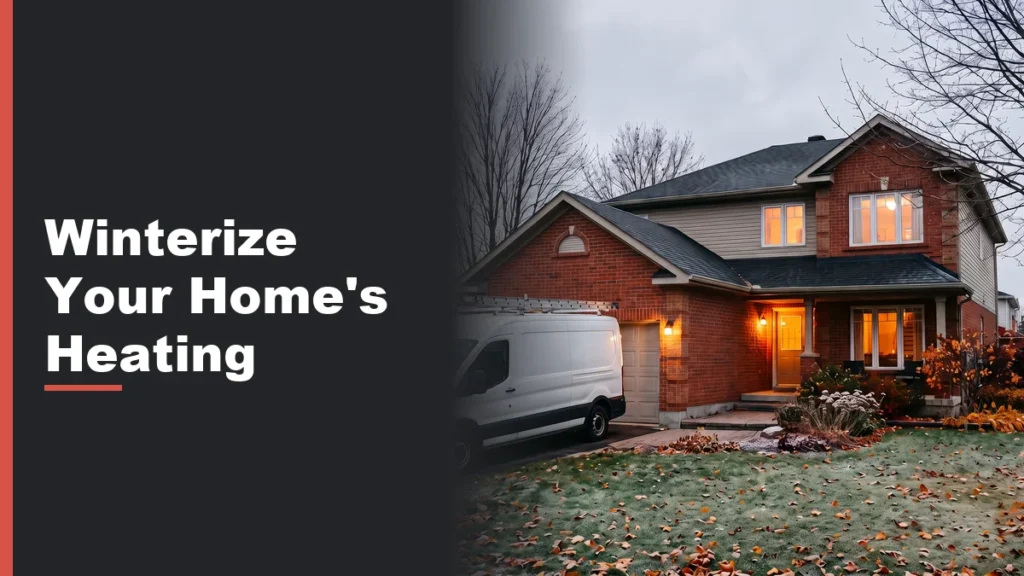
Every October, Ottawa runs the same story on repeat. Overnight temperatures drop hard for the first time since spring, furnaces that have sat quiet for months click on for a real test, and a share of them do not come on cleanly. Winterize your home’s heating before that first cold night, not after it, and most of what would have turned into a no-heat call gets caught during a routine seasonal heating system visit instead of an emergency one.
This is not a furnace tune-up walkthrough. It is the bigger picture: the ducts, the humidifier, the backup plan, and the small jobs around a house that make an Ottawa winter easier on a heating system as a whole, spread across a few weekends instead of crammed into one afternoon.
Good to know
This article is general seasonal guidance for Ottawa homeowners. It is not an assessment of your specific heating system, and gas appliances, venting and electrical components should only be serviced by a qualified technician. Treat a persistent gas odour or a sounding carbon monoxide alarm as urgent, not something to schedule around.
Why Early Prep Beats a Last-Minute Scramble
A heating system that has sat idle for five or six months does not always restart the way it stopped. Dust settles in places a summer never disturbs, small mechanical wear goes unnoticed until the system runs for hours at a stretch, and the first real sign something is off often shows up as a house that will not warm past a certain point during the coldest week of the year.
None of that is inevitable. Most of it gets caught by looking at the system, and the rooms it serves, before the cold arrives rather than during it. The goal is simple: winterize your home’s heating in stages rather than trying to handle it all at once.
Six Weeks Out: The System Check
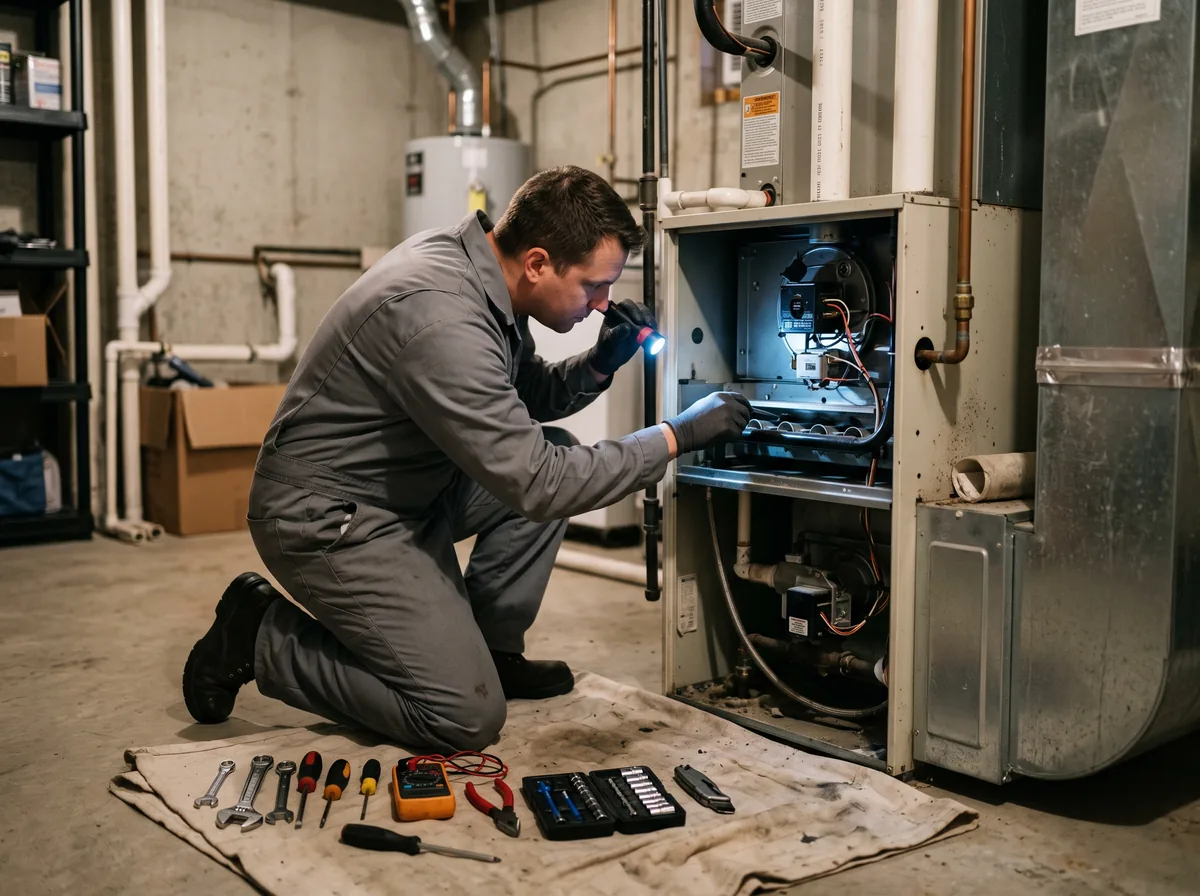
Roughly six weeks before you expect to need real heat, which for most of the region lands somewhere in late August or September, is a reasonable point to start. Turn the thermostat to heat and let the system run through a full cycle. A faint burning-dust smell for the first minute or two is normal as accumulated dust burns off a heat exchanger that has not run in months. A smell that lingers, a new rattle, or a system that will not fire at all is worth a call before schedules fill up.
Save Your Money
Booking a seasonal check while a company’s calendar is still open typically costs less hassle than calling once temperatures have already dropped and most of the city needs a technician the same week. Ask the technician to flag anything worth watching, not just anything that needs fixing today.
Two Weeks Out: Ducts, Air and Backup Heat
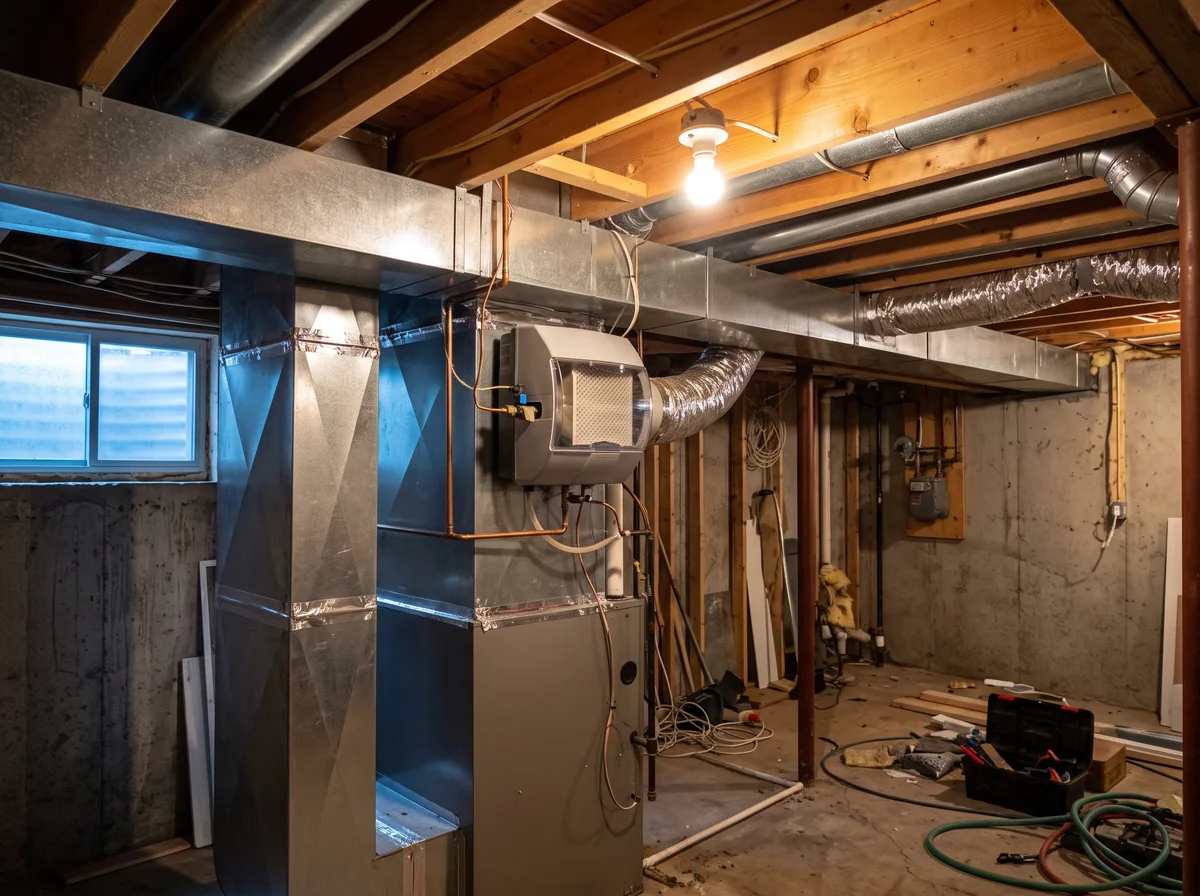
With two weeks left before you expect to rely on the system daily, look past the furnace itself. If it has been a while since the ductwork was inspected, this is a reasonable point to book a duct inspection and cleaning, since restricted airflow makes a heating system work harder for the same result. If the house runs noticeably dry once the heat is on consistently, check whether a whole-home humidifier needs a fresh pad or filter before its first real week of use this season.
It is also worth deciding, ahead of time, what the household will do if the system needs a repair during a cold stretch. A backup space heater that is rated for indoor use and kept clear of anything flammable, a plan for where kids or pets will stay warmest, and a saved number for after-hours help all take five minutes to sort out now and save a scramble later.
The First Cold Snap: What to Watch For
Once the system is running daily, pay attention for the first week or two. Uneven heat between rooms, a thermostat that seems to run longer than it used to for the same temperature, or a system that cycles on and off more than it used to are all worth mentioning on a service call, even if nothing feels like an emergency yet.
Red Flag
A persistent gas odour, a sounding carbon monoxide alarm, or soot around a vent are not wait-and-see situations. Turn the system off, get everyone out of the house, and call emergency HVAC service or your gas utility’s emergency line right away.
How to Winterize Your Home Heating in Three Weekends
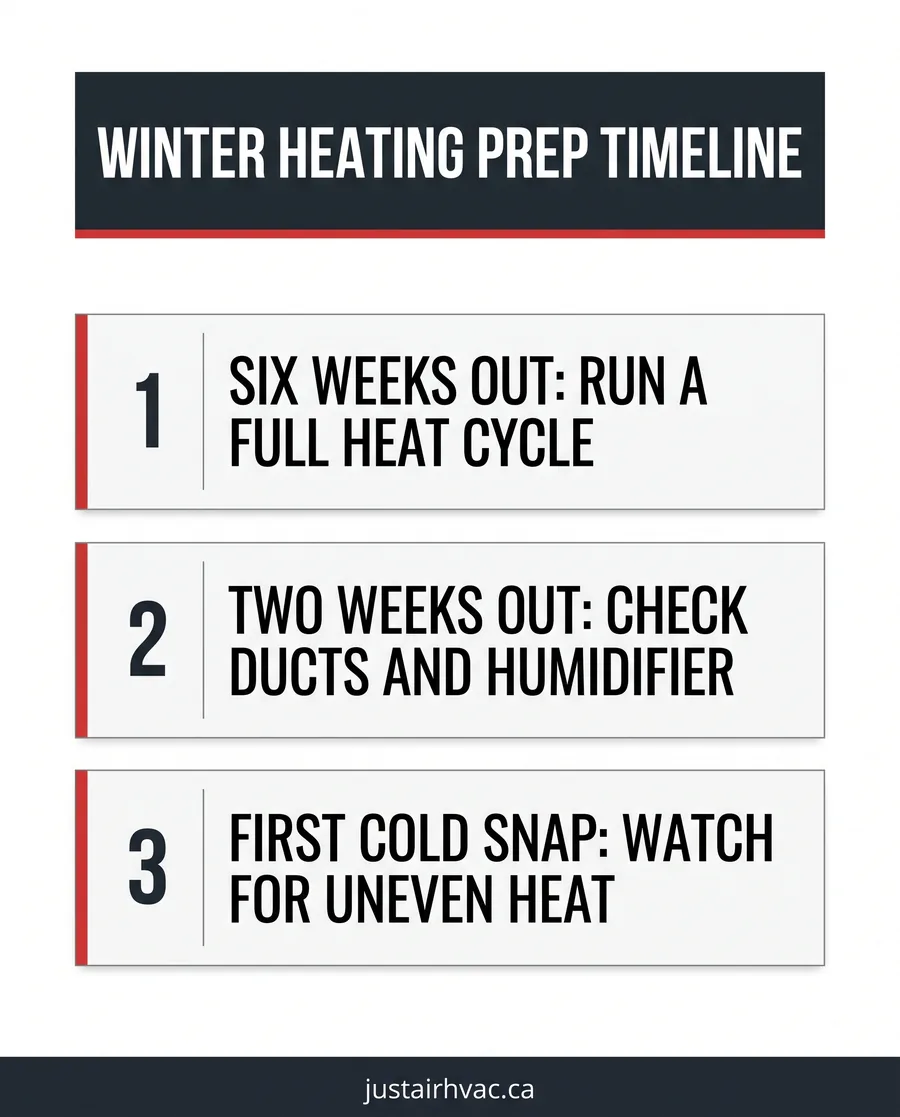
Winterize your home’s heating in three manageable weekends rather than one long day, and none of it feels overwhelming. Here is the short version of everything above:
- Weekend one: run a full heat cycle, check the thermostat, and book a seasonal visit while schedules are still open
- Weekend two: look at the ductwork, check the humidifier pad or filter, and decide on a backup heat plan
- Weekend three: once the system is running daily, note any uneven heat, new sounds, or smells and mention them on the next call
Download the free quick guide
A printable, weekend-by-weekend guide to winterizing a home’s heating system, plus the questions worth asking a technician before the season gets busy.
Frequently Asked Questions
When should I start to winterize my home’s heating system?
Roughly six weeks before you expect to need heat daily works well for most of the region, which usually lands in late August or September. That gives enough time to run a full heat cycle, book a seasonal visit while a technician’s schedule still has room, and handle the ductwork or humidifier before the first real cold snap arrives. Starting earlier rarely hurts, since most of the checklist takes only a weekend at a time.
Do I need a professional visit, or can I handle this myself?
It is a mix. Running a full heat cycle, checking the thermostat mode, and watching for uneven heat or unusual sounds are things most homeowners can do on their own. Anything involving the burner compartment, gas connections, the flue, or electrical components inside the furnace should go to a qualified technician, since those parts carry real safety risk if handled incorrectly.
What is the first sign a heating system is not ready for winter?
Uneven heat between rooms, a system that seems to run longer than usual to hit the same temperature, or a burning smell that lingers past the first minute of a heat cycle are the most common early signs. None of them are emergencies on their own, but any of them are worth mentioning the next time a technician is on site rather than waiting until the system stops working altogether.
Does winterizing my home’s heating include the ducts and humidifier too?
It should. A furnace that is running fine can still leave a house underheated or unusually dry if the ductwork is restricted or a whole-home humidifier has not been serviced since spring. Treating winter prep as a whole-home job, not just a furnace check, is what catches those gaps before the system is working against itself.
What should I do if I smell gas or hear a carbon monoxide alarm?
Treat it as urgent. Turn the heating system off if it is safe to reach the switch quickly, get everyone out of the house, and call for emergency help from outside rather than investigating the smell yourself. This applies any time of year, not just during winter prep, and it is not something to wait on until morning.
Regular professional servicing, not just a filter change, is what Natural Resources Canada’s heating maintenance guidance points to as the thing that keeps a system running the way it was designed to, whatever the manufacturer or fuel type. Building that into a fall routine, alongside the ductwork and humidifier checks above, is most of what winterizing a home’s heating actually involves.
Just Air HVAC serves homeowners across Nepean, Kanata and Barrhaven getting ready for the season, and booking a seasonal heating visit now is the easiest way to start the list above with a second set of eyes on the system.
