 Proudly Canadian


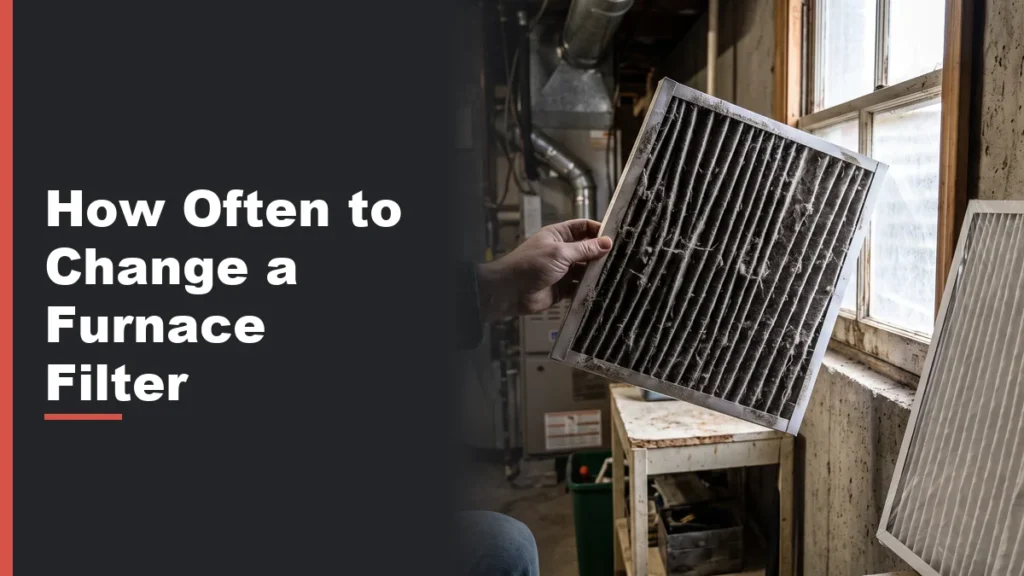
A Kanata homeowner asked us something last week that comes up on almost every furnace and heating system visit we run: how often to change a furnace filter, and whether the sticker on the old one still means anything. The honest answer is that the box rarely matches the house. A filter sitting in a quiet condo does a different amount of work than one pulling air through a place with two dogs and a finished basement.
What follows is the range most Ottawa homes actually fall into, the signs that move you toward one end of it, and the steps for swapping the filter yourself in under ten minutes.
What tells you it is time
A calendar reminder is a reasonable starting point, but the filter itself tells you more. Slide it out and hold it up to a window or a bright light. A filter that still lets light through the pleats has some life left. One that looks grey and matted, with almost no light passing through, has been doing more filtering than moving air, and that is where the furnace’s blower starts to feel it.
A weaker, less consistent airflow at the vents is the other giveaway. If a room that used to heat up quickly now takes longer, or the furnace seems to run in longer stretches than it used to, a clogged filter is one of the first, cheapest things worth checking before assuming something bigger is wrong.
The typical interval, and why it is a range
For a standard one-inch pleated filter, most Ottawa households land somewhere between one and three months. That range exists because the filter’s MERV rating and the house behind it both move the number. The Environmental Protection Agency’s overview of how MERV ratings measure filter performance is a useful reference if you want to understand what the number on the box actually means, rather than just trusting it.
A higher MERV number traps more and finer particles, which is good for the air but means the filter loads up faster and generally needs attention on the shorter end of the range. A lower MERV filter breathes more easily and can often stretch toward the three-month mark in a typical household with no pets and no smokers.
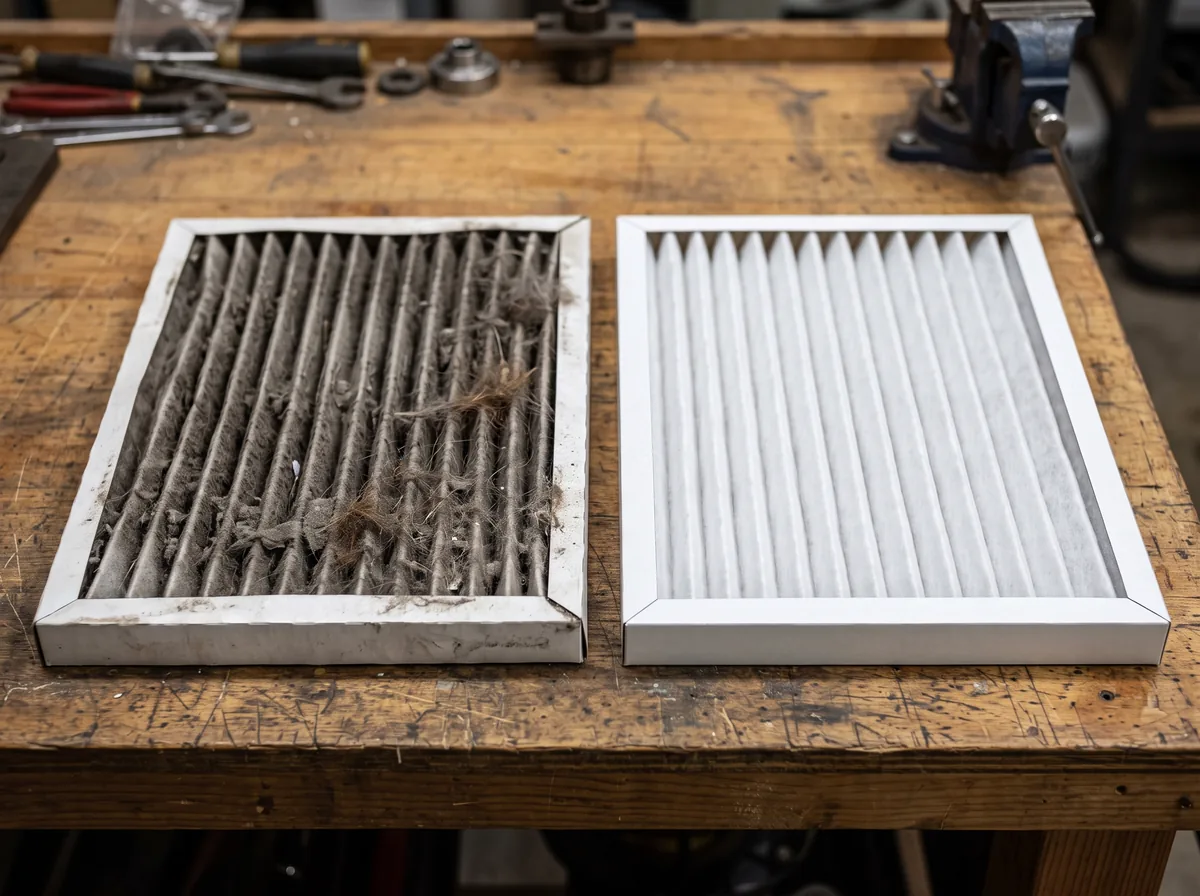
Pro tip
Write the install date directly on the filter frame with a permanent marker before you slide it in. It turns a guess into a quick glance the next time you walk past the furnace room.
How often to change a furnace filter, step by step
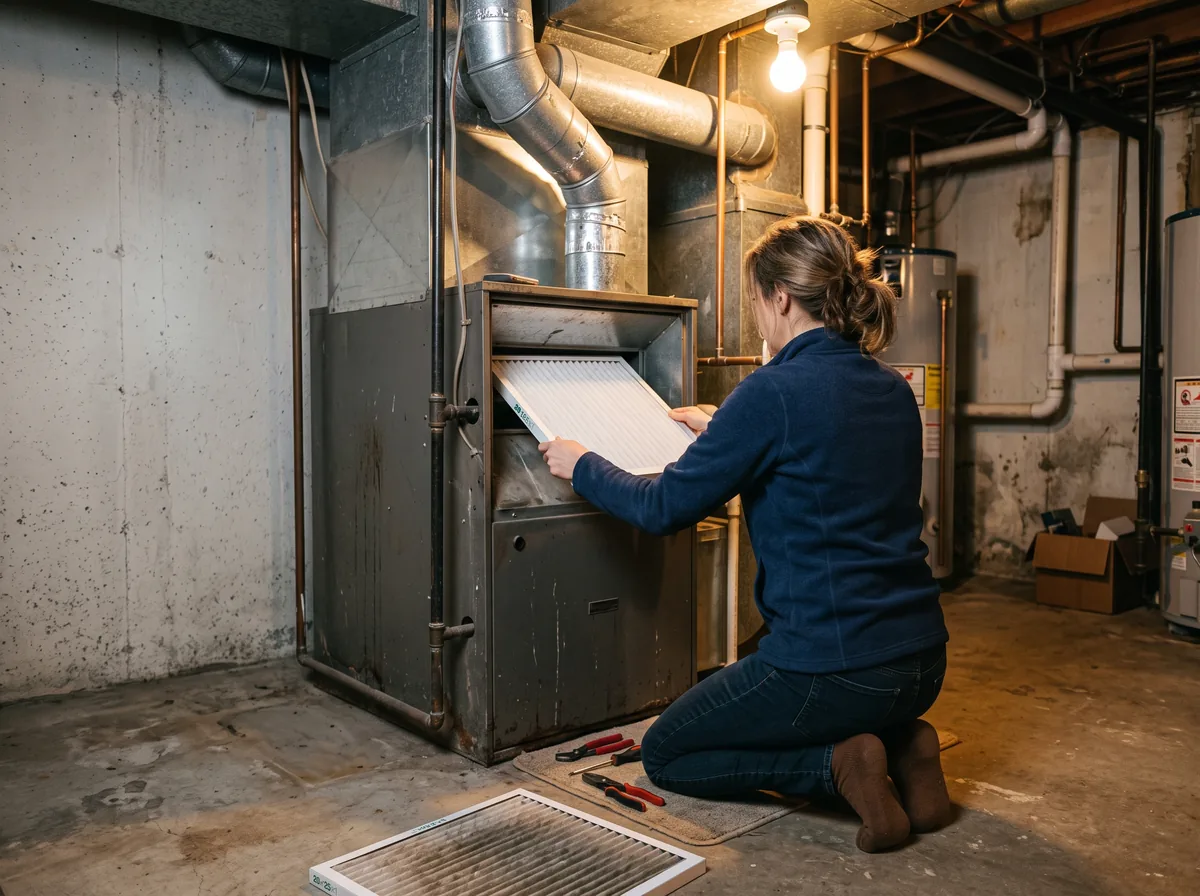
The swap itself is quick once you know where everything lives. Here is the sequence we walk homeowners through on a service visit.
Good to know
This is general guidance for a standard residential furnace filter swap. Furnace models, filter slot locations, and access panels vary, and some setups involve gas or electrical components nearby. If anything feels unfamiliar or the panel will not come free easily, stop and have a qualified technician handle it rather than force it.
- Turn the thermostat to off, or switch off power at the furnace switch, so the blower does not kick on mid-swap.
- Find the filter slot, usually a thin door on the return-air side of the furnace cabinet or built into the ductwork nearby.
- Note the airflow direction arrow printed on the old filter’s frame before you pull it out.
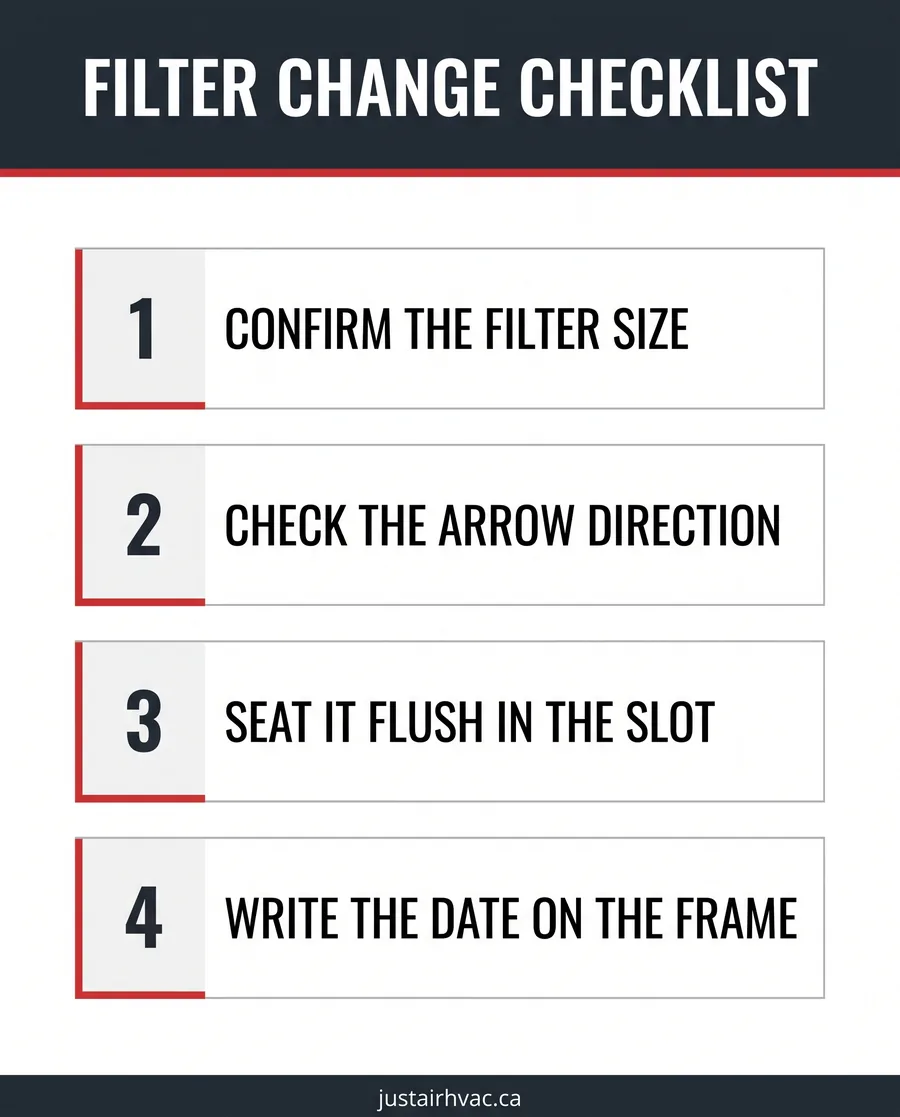
- Slide the old filter out and check the size printed on the frame edge so the replacement matches exactly.
- Insert the new filter with the arrow pointing the same direction, toward the furnace, and seat it flush in the slot.
- Close the access panel fully, then restore power or reset the thermostat.
- Note the date on the frame and set a reminder for the next check, based on the interval that fits your household.
Red flag
If the new filter will not seat flush, or the access panel does not close all the way, stop rather than force it shut. A gap around the filter lets unfiltered air bypass it entirely, which defeats the point of changing it in the first place.
What moves the interval up or down
A few things push the interval toward the shorter end. Pets shedding indoors, a recent renovation with drywall dust still settling, running the furnace fan continuously rather than on a cycle, and wildfire smoke smoke days that push more particulate through the system all shorten the window. None of that means something is wrong with the furnace, it just means the filter is working harder than the box’s estimate assumed.
That is also exactly why how often to change a furnace filter shifts from one season to the next for the same house. A quiet October with the windows still open some days is not the same load as a January stretch with the furnace running nonstop and the fireplace going most evenings.
If you are weighing whether a higher-grade filter is worth it for a household with allergies, our page on HEPA-grade filtration upgrades covers the equipment side, and our broader home air quality service overview is worth a look if filtration alone is not solving the problem. Neither swaps in for the routine filter check itself, which stays a homeowner task on its own schedule.
Frequently asked questions
How often should I change my furnace filter?
For a standard one-inch pleated filter, most homes land between one and three months. A higher MERV rating, pets, a recent renovation, or running the fan continuously all push toward the shorter end. The most reliable check is not a fixed date but the filter itself: hold it to a light and replace it once it looks grey and matted rather than waiting for a specific week to arrive.
Does a higher MERV rating mean I can wait longer between changes?
Generally the opposite. A higher MERV filter traps more and finer particles, which is good for air quality but means it loads up faster than a lower-rated filter in the same house. Pair a higher-MERV filter with more frequent checks rather than a longer interval, and confirm the furnace is rated to handle that filter’s restriction before installing one, since not every blower is built for the added resistance a denser filter creates.
What happens if I leave a dirty filter in too long?
Airflow through the system gradually weakens, which can make rooms feel slower to heat and pushes the blower to work harder for the same result. It is a common, fixable cause of uneven comfort. If airflow stays weak after a fresh filter is installed, that usually points to something else in the system, such as the ductwork or the blower itself, worth having a technician look at directly.
Can I just look at the filter instead of tracking a date?
Yes, and it is often more accurate than a calendar reminder alone. Slide the filter out and hold it to a window or bright light. Light passing through fairly evenly means it still has life left. A filter that looks grey, matted, or blocks most of the light is due for a swap regardless of how many weeks have passed.
Does the interval change between winter and summer?
It often does, since the same filter slot handles airflow for both the furnace in winter and the air conditioner in summer. A house running the system nonstop through a cold snap or a heat wave pulls more air through the filter than one cycling on and off during mild weather, so the same filter can load up faster in peak seasons.
Download the free quick guide
A printable page with the swap steps, what to check before you buy a replacement, and a spot to log the date.
A simple way to stop guessing at how often to change a furnace filter:
- Check the filter tonight, hold it to the light, and note what you see.
- Write today’s date on the frame, whether you replace it now or not.
- Set a reminder at the short end of the range if you have pets, recent renovation dust, or run the fan continuously.
Just Air HVAC services furnaces and filtration across Kanata, Barrhaven, Orleans, and the rest of the Ottawa area. If the airflow still feels weak after a fresh filter, book an Ottawa heating and cooling visit and we will look at what is actually behind it.
