 Proudly Canadian


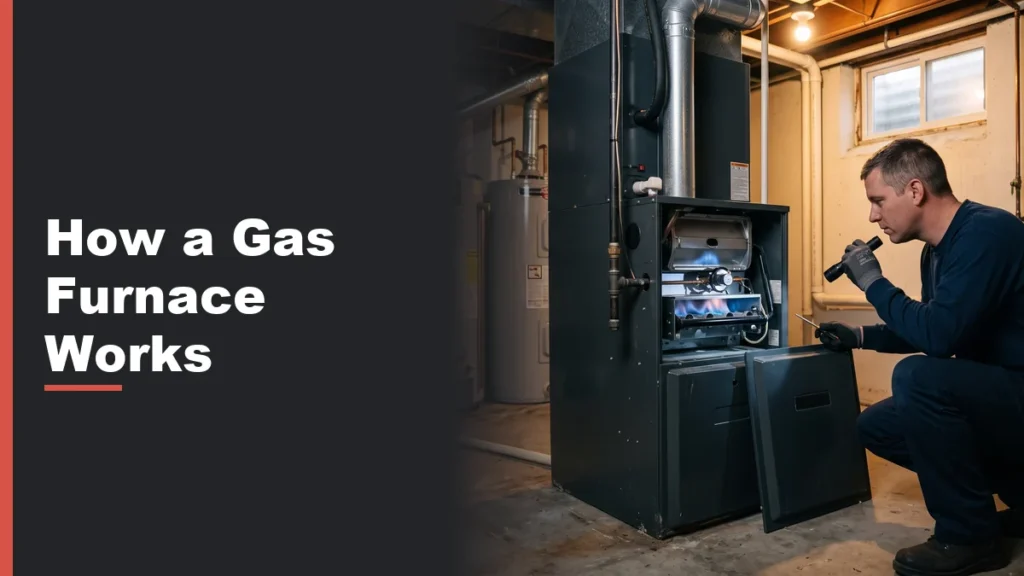
Every time your thermostat clicks over on a cold morning, a small controlled explosion happens inside a metal box in your basement or utility closet, dozens of times a winter, without you ever seeing it. If you have ever actually wondered how does a furnace work, past the short answer of “it burns gas and blows hot air,” the real sequence runs through a control board, an igniter, a heat exchanger, and a blower fan in under a minute. Our technicians walk this exact sequence during every heating system visit we run, so here is the same walkthrough in plain language.
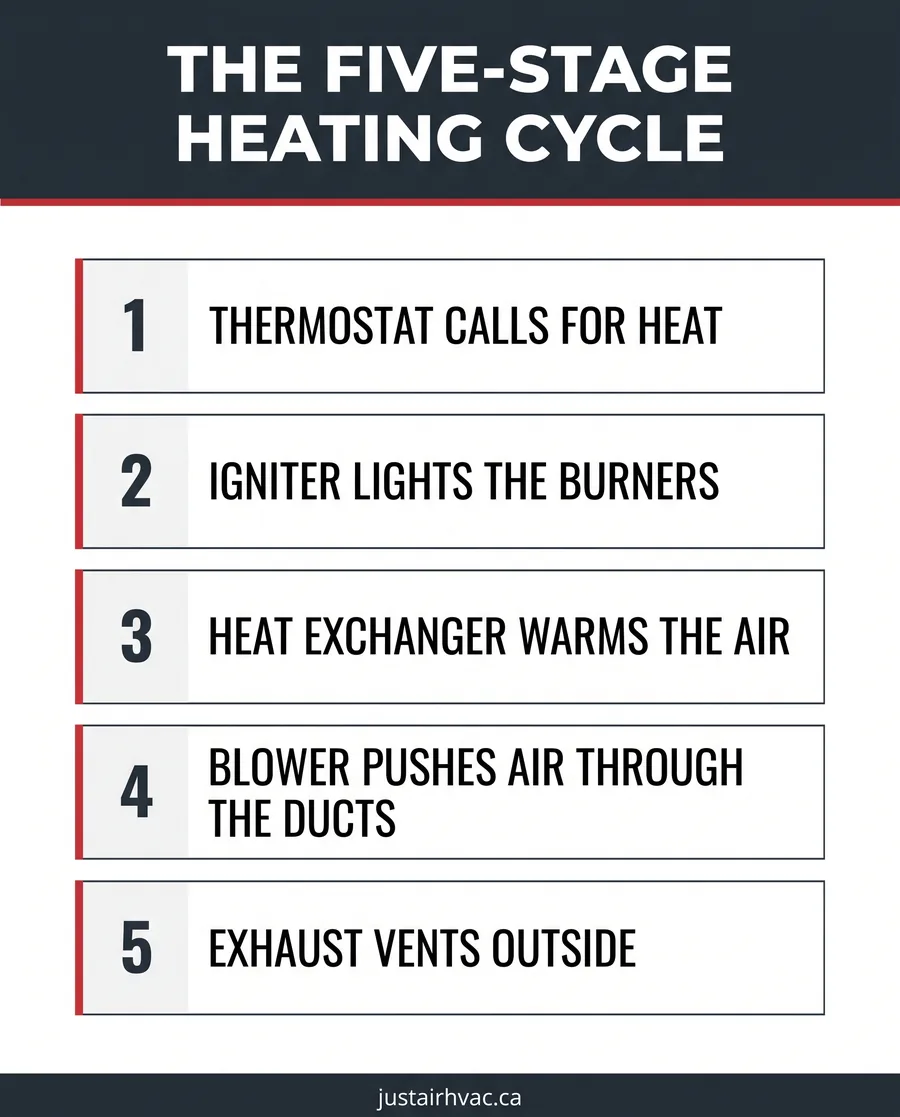
None of this requires a tool belt to follow. Once you can picture how a furnace works in five stages, a lot of behaviour that used to seem random, a delayed fan, a faint smell for a few seconds, a particular sound at startup, stops being mysterious.
What Happens the Moment the Thermostat Calls for Heat
A furnace does nothing until the thermostat sends a low-voltage signal to the control board asking for heat. That is the first instant a furnace works at all rather than sitting idle. The board is the furnace’s decision-maker. It runs a short self-check, starts the inducer motor to pull air through the venting, and waits for a pressure switch to confirm that air is actually moving before it lets anything else happen.
That pressure check exists for a simple reason: gas should never reach a burner unless the furnace can confirm the exhaust path is clear. Once the switch closes, the igniter begins warming, and the whole sequence is roughly fifteen to thirty seconds old at this point, though the exact timing depends on the model. That safety check before anything burns is the first stage of how a furnace works.
Did You Know
Older furnaces kept a small standing pilot light burning around the clock. Most furnaces built in the last two decades replaced that with a hot surface igniter or an intermittent spark, so nothing burns gas until the thermostat actually calls for heat. That single change is part of how a furnace works today versus a generation ago.
How a Gas Furnace Works to Light the Flame
Once the igniter reaches temperature, the control board opens the gas valve for a fraction of a second and the burners light. A flame sensor, a thin metal rod sitting in the flame itself, confirms ignition happened within a second or two. If it does not detect a flame, the board shuts the gas valve again rather than leaving it open, and most furnaces will try that startup sequence a few more times before locking out and flashing an error code.
The efficiency tier of the furnace changes some of the mechanics here. A standard-efficiency furnace vents flue gas that is still quite hot, while a high-efficiency condensing furnace pulls extra heat out of that exhaust before it leaves the house, which is why it needs a second heat exchanger and a condensate drain. Natural Resources Canada’s furnace ratings guide breaks down what those efficiency tiers actually mean if you want the technical side of it.
People Often Ask
Is it normal to smell a little gas for a second or two at startup? A brief trace during ignition is common on some furnaces. A smell that lingers, gets stronger, or shows up when the furnace is not running is a different situation and worth having a licensed technician check the same day rather than waiting.
The Heat Exchanger: Turning Flame Into Warm Air
The heat exchanger is the part doing the actual translation from flame to warm air, and it is arguably the most important component in the whole furnace. Combustion gases travel through one side of a sealed metal chamber while household air is pulled across the outside of that same chamber by the blower. The two air streams never touch. The exchanger’s whole job is to let heat pass through the metal wall while keeping the combustion byproducts contained and routed out through the venting.
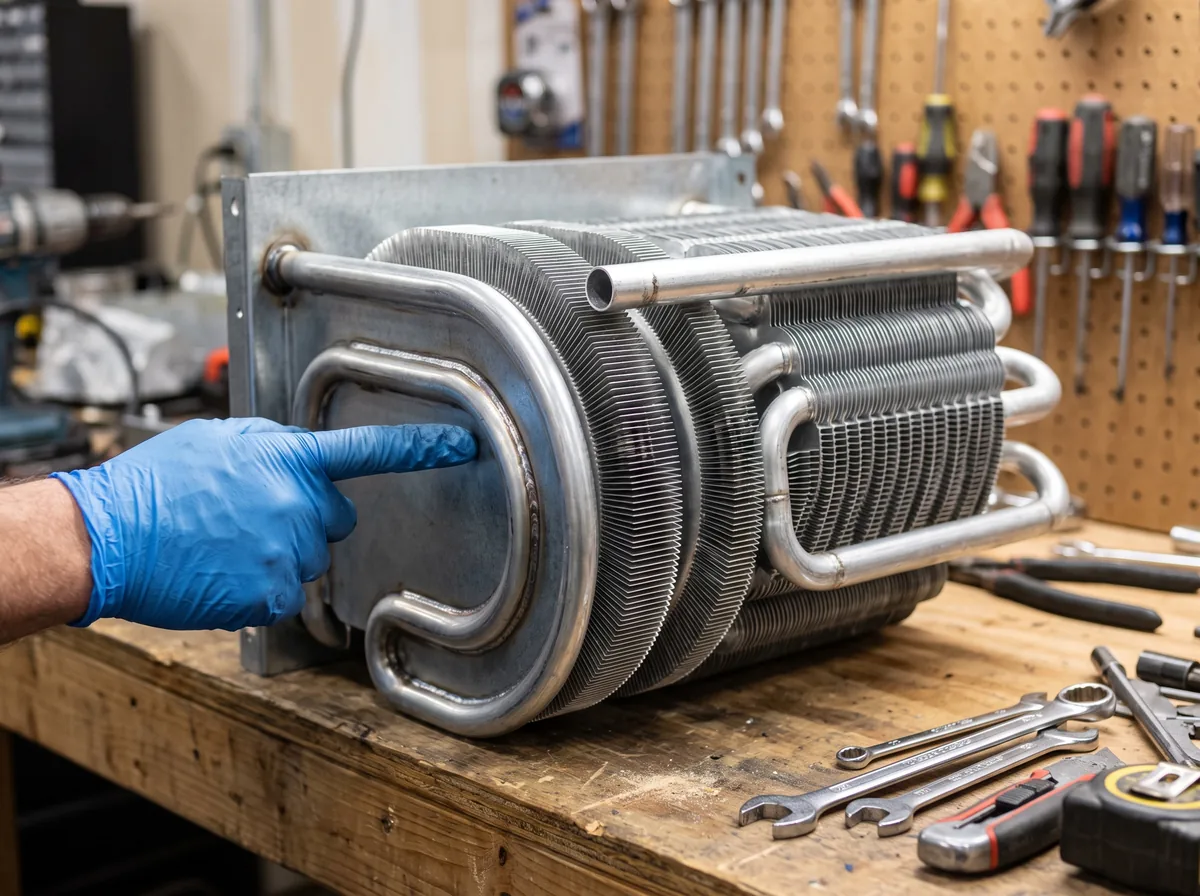
That seal is why a cracked heat exchanger gets treated as a priority repair rather than something to schedule around. A crack can let combustion air mix with the air being pushed into your living space, which is a job for a licensed technician to inspect and confirm, not something to diagnose from a smell or a hunch. Annual inspection is the main way this kind of wear gets caught early, and it is the stage of how a furnace works that we spend the most time on during a visit.
Good to know
This article explains how a gas furnace works in general terms for homeowners across the region. It is not a substitute for an inspection of your specific system. Combustion, venting, and heat exchanger condition should be confirmed by a licensed HVAC technician, and any gas smell that lingers should be treated as an emergency, not something to wait out.
The Blower: Moving Air Through the Ductwork
The blower is the part most people actually notice, since it is the fan that pushes warm air through the ductwork and out of the registers in every room. It does not start the instant the burners light. Most furnaces hold off for a short delay, usually well under a minute, so the heat exchanger has time to warm up before cold air gets pushed across it. That delay is also why a furnace sometimes seems to sit quietly for a moment after it kicks on, and it is one more small proof of how carefully a furnace works through its startup order.
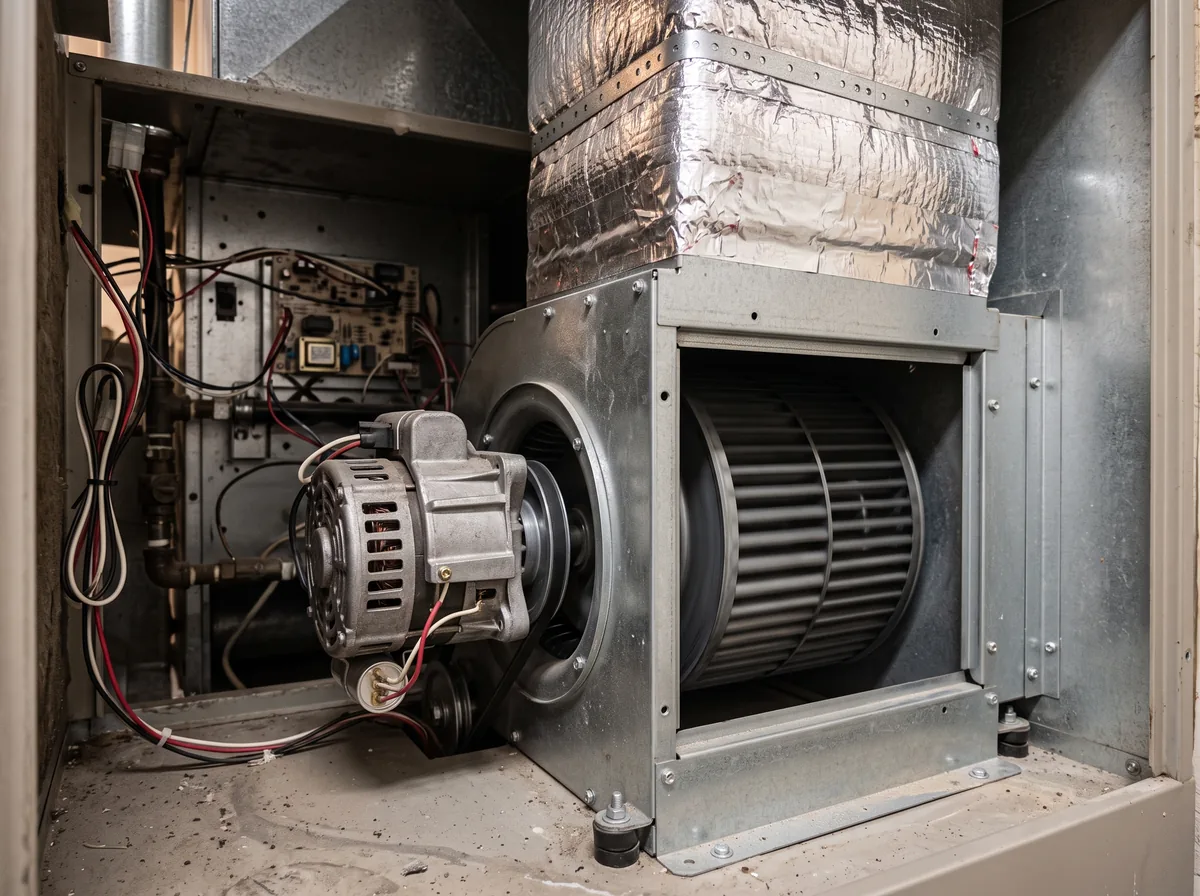
Airflow only works as designed when the return air path is clear, which is the whole reason filter condition and duct condition matter so much to how a furnace performs. A blower fighting a clogged filter or dusty ductwork has to work harder for the same amount of heat delivered. Our duct cleaning and airflow service page covers what that side of the system involves if airflow has felt weaker than it used to. Airflow is the part of how a furnace works that homeowners can actually keep up with themselves, mostly by changing the filter on schedule.
Where the Exhaust Goes
Every gas furnace has to send its combustion byproducts somewhere outside the house, and the venting material depends on the efficiency tier. Standard-efficiency furnaces typically vent through a metal flue because the exhaust is still hot. High-efficiency condensing furnaces cool that exhaust enough to vent through PVC pipe instead, often running out a side wall rather than up through the roof. Both approaches are common across the homes we service, and the right one depends on the furnace installed, not on preference. Venting is the last stage of how a furnace works before the cycle resets and waits for the thermostat’s next call.
Working carbon monoxide detectors near sleeping areas are a standard companion to any gas appliance, furnaces included, and checking them belongs on the same seasonal list as changing a filter. If an alarm ever sounds, treat it as real rather than assuming a false trigger.
Download the free quick guide
A one-page reference to the five-stage cycle and the questions worth asking your technician at your next inspection.
Frequently Asked Questions
How long does the full furnace cycle actually take?
From the thermostat’s call for heat to warm air reaching a register is usually under two minutes, most of it spent on the safety checks before ignition rather than the ignition itself. That order is exactly how a furnace works: the pressure switch confirmation, igniter warm-up, and blower delay each take a matter of seconds, but they run in a fixed sequence and none of them get skipped. A furnace that takes noticeably longer than that, or tries the sequence more than once before succeeding, is usually flagging a specific component worth having checked.
Why does my furnace blower run for a while after the heat shuts off?
That is normal and intentional, and it is simply how a furnace works to use leftover heat instead of wasting it. Once the thermostat is satisfied and the burners shut off, the heat exchanger is still warm, and the blower keeps running for a short period to pull that remaining heat into the house. A temperature sensor on the exchanger tells the blower when it is safe to stop. If the fan runs on for an unusually long time or never seems to shut off, that is worth mentioning at your next service visit.
What is the difference between a single-stage and a two-stage furnace?
A single-stage furnace runs at one output level: full blast, or off. A two-stage furnace can run at a lower output most of the time and only ramp up to full capacity on the coldest days, which tends to mean steadier temperatures and a quieter startup. Both furnace types work through the same basic five-stage cycle described in this article. The difference is how much gas and airflow the burners and blower use at each stage, not the sequence itself.
Can I tell if my heat exchanger has a problem just by listening?
Not reliably, and this is one part of how a furnace works that really does need a professional look. A cracked or corroded heat exchanger does not always make an obvious sound, and some of the symptoms people associate with it, a faint odour, a headache after the furnace has been running, soot near the burners, can also point to other issues entirely. This is a component that needs a visual and pressure inspection by a licensed technician to confirm one way or the other, which is one of the main things covered during an annual furnace inspection.
Knowing how a furnace works will not fix one that skips a step, but it makes the symptoms easier to describe accurately when you do call someone, which usually gets you a faster diagnosis. Homeowners in the Kanata service area, Stittsville, and Manotick call us for exactly that reason: a furnace that hesitates, short-cycles, or makes a new sound partway through this cycle.
If your furnace is not following this pattern the way it should, book a furnace inspection and we will walk you through what our technician finds, in the same plain terms as this article.
